Table of Contents
Whether you’re monitoring wildlife patterns, securing remote property, or managing hunting leases, cellular trail cameras have revolutionized how we receive information from the field. Gone are the days of hiking miles to check SD cards, only to find the perfect shot happened three weeks ago. Today’s advanced models deliver instant notifications directly to your smartphone, transforming passive observation into active, real-time intelligence gathering that keeps you connected to what matters most, no matter where you are.
As we look toward 2026, the technology behind these devices continues to evolve at a remarkable pace, with improvements in image quality, battery efficiency, and network connectivity creating unprecedented opportunities for users. Understanding what separates exceptional cellular trail cameras from mediocre ones requires more than just comparing spec sheets—it demands a comprehensive grasp of how various features work together to deliver reliable, timely alerts. This guide walks you through everything you need to know to make an informed decision, ensuring your investment pays dividends in performance and peace of mind.
Top 10 Cellular Trail Cameras
Detailed Product Reviews
1. SPYPOINT Flex-M Twin Pack Cellular Trail Cameras - Best Hunting Accessories, No WiFi Needed, GPS, Night Vision, Dual-Sim LTE, IP65 Water-Resistant Game Camera, 28MP Photos, 720p Videos + Sound (2)

Overview: The SPYPOINT Flex-M Twin Pack delivers cellular trail camera technology at an accessible price point, ideal for hunters monitoring multiple locations. These cameras capture 28MP photos and 720p videos with sound, transmitting footage directly to your phone via LTE networks. With GPS tagging, night vision, and IP65 water resistance, they’re built to withstand harsh outdoor conditions while keeping you connected.
What Makes It Stand Out: The Flex-M’s most compelling feature is its free photo transmission plan—100 images monthly with no fees. The cross-carrier dual-SIM system automatically selects the strongest network, eliminating manual carrier selection. Its innovative Time-Lapse+ mode captures interval shots while simultaneously responding to motion detection. The user-friendly app offers BUCK TRACKER AI for species filtering and remote settings management.
Value for Money: This twin pack offers exceptional value for budget-conscious hunters. The free monthly plan alone saves $60+ annually compared to competitors’ basic subscriptions. While 720p video trails premium models, the 28MP photos provide excellent detail. Solar panel compatibility (sold separately) extends field life, reducing battery costs. For two cameras at this price, it’s hard to beat.
Strengths and Weaknesses: Strengths include the genuinely free transmission plan, seamless cross-carrier connectivity, versatile capture modes, and intuitive app interface. The twin pack configuration is perfect for property-wide coverage. Weaknesses are the 720p video limitation, lack of included microSD card, and solar panel sold separately. The 28MP resolution falls short of higher-end 36-40MP options.
Bottom Line: The SPYPOINT Flex-M Twin Pack is outstanding value for hunters wanting reliable cellular connectivity without subscription commitments. While video resolution could be better, the free plan, dual cameras, and robust feature set make it a top choice for budget-minded scouts.
2. SPYPOINT Flex G-36 Twin Pack Cellular Trail Camera, 36MP Photos and 1080p Videos with Sound, GPS Enabled, Dual-Sim LTE Connectivity, 100’ Flash & Detection Range, Responsive Trigger up to .3S

Overview: The SPYPOINT Flex G-36 Twin Pack upgrades image quality and performance for serious hunters. These cameras deliver stunning 36MP photos and 1080p videos with audio, providing exceptional detail for analyzing game patterns. The 100-foot flash and detection range, coupled with GPS functionality and dual-SIM LTE connectivity, ensures comprehensive property monitoring without physical card retrieval.
What Makes It Stand Out: The G-36’s 36MP resolution captures minute details like antler points that lower-resolution cameras miss. The 1080p video with sound creates an immersive scouting experience. Improved battery life significantly extends field deployment, reducing disruptive visits. The cross-carrier technology automatically connects to the strongest available network, while the responsive 0.3-second trigger speed ensures minimal missed opportunities.
Value for Money: While pricier than the Flex-M, the G-36 justifies its cost through superior imaging and enhanced battery performance. The jump from 720p to 1080p video with audio adds substantial scouting value, and 36MP photos provide professional-grade detail. The twin pack configuration effectively halves the per-camera cost. Factor in reduced battery replacement trips, and the long-term value becomes clear.
Strengths and Weaknesses: Strengths include exceptional 36MP photo resolution, full HD video with sound, excellent battery optimization, 100-foot detection range, and reliable cross-carrier connectivity. The twin pack offers strategic deployment flexibility. Weaknesses include the 0.3-second trigger being slower than some competitors’ 0.2s offerings, lack of included solar panel, and no free photo plan requiring paid subscription.
Bottom Line: The SPYPOINT Flex G-36 Twin Pack excels for hunters prioritizing image quality and extended field life. The superior resolution and video capabilities make it worth the premium over entry-level models, though the subscription requirement and trigger speed are considerations.
3. SEHMUA 4G LTE Cellular Trail Cameras 3rd Gen with Live Streaming, Game Camera Built-in SIM Card with Motion Activated 0.2s Trigger Time Solar Trail Camera IP66 Waterproof

Overview: The SEHMUA 3rd Gen cellular trail camera pushes technological boundaries with 2K live streaming and integrated solar power. This feature-rich game camera transmits real-time footage via 4G LTE directly to your phone, allowing immediate wildlife observation. With a lightning-fast 0.2-second trigger, 850nm low-glow night vision, and 120° wide-angle lens, it’s engineered for comprehensive, instant monitoring.
What Makes It Stand Out: Live streaming sets this camera apart—watch wildlife in real-time rather than waiting for transmitted clips. The included 4W solar panel with 7800mAh rechargeable battery promises uninterrupted 365-day operation. The 0.2-second trigger is among the fastest available, while the 120° field of view captures broader scenes. The 850nm infrared system provides 82-foot night vision range with minimal visible glow.
Value for Money: The included solar panel adds significant value, saving $30-50 compared to separate purchases. However, ongoing costs are higher—$19.90/month after the 7-day trial, with cloud storage requiring separate subscription. The proprietary, non-detachable SIM limits flexibility. For users wanting real-time monitoring, the premium is justified, but traditional scouting may find subscription costs steep versus SPYPOINT’s free tier options.
Strengths and Weaknesses: Strengths include 2K live streaming, included solar panel, blazing 0.2s trigger speed, wide 120° angle, and robust IP66 waterproofing. The integrated power solution is genuinely innovative. Weaknesses are the mandatory proprietary SIM with high subscription fees, no free transmission tier, limited to US coverage, and cloud storage costs.
Bottom Line: The SEHMUA 3rd Gen is perfect for tech-forward hunters wanting real-time property monitoring. The solar integration and live streaming are excellent, but be prepared for ongoing subscription expenses that exceed competitor offerings.
4. TACTACAM Reveal X Gen 3.0 Cellular Trail Camera: Auto Connect 4G LTE, 4K Photo, 1080p Video, Low-Glow IR Flash, No SD Card Needed, Long Battery Life – Best Hunting, Game & Property Monitoring Camera

Overview: The TACTACAM Reveal X Gen 3.0 positions itself as a reliable, entry-level cellular trail camera prioritizing simplicity. It captures 4K photos and 1080p video, transmitting directly to your phone via auto-connecting 4G LTE. The standout feature is eliminating SD cards—footage transmits directly without local storage hassles. Designed for hunters wanting straightforward setup and dependable operation, it focuses on core functionality.
What Makes It Stand Out: The no-SD-card operation simplifies field management and eliminates concerns about card capacity or corruption. The powerful app includes deer analytics, mapping tools, and weather data, providing comprehensive scouting intelligence. Adjustable motion activation sensitivity prevents false triggers while ensuring captures. The low-glow IR flash maintains discreet nighttime operation, and long battery life reduces maintenance trips. Its reputation as hard-working suggests proven field reliability.
Value for Money: As an entry-level cellular camera, the Reveal X offers competitive pricing for 4K photo and 1080p video capabilities. The elimination of SD cards reduces accessory costs and management time. While specifications are less detailed than premium competitors, the focus on reliability and ease-of-use provides value for beginners or those wanting hassle-free operation. Battery longevity translates to savings on replacement costs and reduced disturbance of hunting areas.
Strengths and Weaknesses: Strengths include SD-card-free operation, user-friendly setup, robust app with analytics, long battery life, and reliable auto-connect LTE. The entry-level positioning makes it accessible. Weaknesses are the lack of detailed specifications (trigger speed, detection range), no mention of solar compatibility, and potentially limited advanced features compared to premium models.
Bottom Line: The TACTACAM Reveal X Gen 3.0 excels for hunters valuing simplicity and reliability over cutting-edge specs. It’s an excellent first cellular camera or dependable backup unit, though detail-oriented users may want more specifications before purchasing.
5. Moultrie Edge 3 Cellular Trail Camera - 2 Pack - 40MP HD Photo Capture - 1080p Low-Glow Flash - GPS - Multi-Carrier Auto-Connect - Built-in Memory - 0.5s Trigger Speed - AI Buck Detection
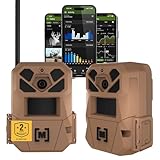
Overview: The Moultrie Edge 3 Twin Pack represents the high-end of cellular trail camera technology, delivering 40MP photo resolution and comprehensive connectivity. These cameras automatically connect to the strongest of four major US carriers, ensuring reliable transmission from remote locations. With built-in memory eliminating SD card needs, GPS tagging, and AI-powered buck detection, the Edge 3 integrates cutting-edge technology for serious hunters.
What Makes It Stand Out: The 40MP resolution surpasses most competitors, capturing exceptional detail for trophy assessment. Four-carrier auto-connectivity provides unmatched signal reliability compared to dual-SIM systems. The integrated onX Hunt Elite membership (3 months included) offers premium mapping and land data. AI Buck Detection automatically filters deer from other species. Unique remote feeder control via the Moultrie Connect app allows integrated wildlife management from one platform.
Value for Money: This premium twin pack commands a higher price but delivers proportional value. The 40MP sensors, four-carrier connectivity, and AI features justify the investment for serious hunters. The included onX Hunt membership ($30 value) and built-in memory reduce additional expenses. While data plans start at $9.99/month, the feature set rivals cameras costing significantly more. For property managers wanting maximum intelligence, the per-camera cost is competitive.
Strengths and Weaknesses: Strengths include industry-leading 40MP resolution, four-carrier connectivity, AI species detection, integrated memory, feeder control capability, and valuable onX Hunt integration. The twin pack offers strategic deployment advantages. Weaknesses include a slower 0.5-second trigger speed versus 0.2-0.3s competitors, premium pricing may exceed casual hunter budgets, and built-in memory limits capacity versus expandable SD cards.
Bottom Line: The Moultrie Edge 3 Twin Pack is ideal for dedicated hunters and property managers wanting maximum image quality and intelligent features. The AI detection and four-carrier connectivity are game-changers, though the trigger speed is a trade-off for the advanced feature set.
6. SEHMUA Trail Camera 2 Packs, Cellular Trail Cameras 4G LTE Live View with Built-in SIM Card 0.2s Trigger Speed Game Camera with Night Vision Motion Activated Waterproof Trail Cam

Overview: The SEHMUA dual-pack cellular trail camera system delivers remote monitoring capabilities without requiring WiFi or external power. Designed for off-grid locations like farms, construction sites, and wildlife areas, each unit features a built-in 4G LTE SIM card compatible with major US carriers. The integrated 4W solar panel and 7800mAh rechargeable battery promise continuous 365-day operation, eliminating battery maintenance headaches.
What Makes It Stand Out: This system excels with its lightning-fast 0.2-second trigger speed and expansive 120° field of view, ensuring minimal missed activity. The combination of solar power and cellular connectivity in a dual-pack configuration offers exceptional coverage value. Its 850nm low-glow infrared system provides 82-foot night vision range while remaining discreet, and the IP66 waterproof rating withstands harsh outdoor conditions.
Value for Money: At approximately $85-100 per camera, the two-pack provides solid value compared to purchasing units separately. The data plans ($19.90/month or $169/year per camera) align with industry standards, though each camera requires its own subscription. The solar panel eliminates ongoing battery costs, saving $30-50 annually per device. A 7-day unlimited trial and 30-day cloud storage trial help offset initial investment risks.
Strengths and Weaknesses: Pros: Dual-pack convenience; solar-powered year-round operation; rapid 0.2s trigger; wide 120° viewing angle; robust IP66 waterproofing; built-in SIM eliminates setup hassles. Cons: Separate data plans required for each camera; memory card not included; cloud storage requires paid subscription after trial; low-glow flash may alert some wildlife.
Bottom Line: An excellent choice for monitoring large properties needing multiple cameras. The solar-powered, maintenance-free design justifies the cost for long-term remote surveillance, though budget for recurring data fees.
7. Moultrie Edge 2 Cellular Trail Camera - Auto Connect Nationwide 4G LTE - On Demand 36MP Photo - 1080P Video with HD Audio - 100 Ft Detection Range - Low Glow Flash

Overview: Moultrie’s Edge 2 represents a refined approach to cellular trail cameras, leveraging the company’s decades of wildlife monitoring expertise. This single-unit camera automatically connects to the strongest nationwide 4G LTE network without SIM card swapping or third-party data purchases. Designed for hunters and property owners, it captures detailed 36MP photos and 1080p video with audio, transmitting data through Moultrie’s integrated platform.
What Makes It Stand Out: The Auto Connect technology seamlessly switches between major carriers, ensuring reliable coverage across remote locations. Moultrie’s USA-based customer support provides expert assistance rarely found with overseas brands. The 100-foot detection range and low-glow infrared flash deliver extended nighttime coverage while minimizing animal disturbance. Simple activation through the Moultrie Mobile app enables remote management without technical complexity.
Value for Money: Starting at $9.99 monthly, Moultrie offers the most affordable data plans in the category, undercutting competitors by 30-50%. The all-in-one pricing eliminates separate SIM purchases and carrier fees. While the initial camera cost runs $150-180, the long-term operational savings are substantial. No solar panel is included, requiring $30-40 in annual battery expenses, but the lower data costs quickly offset this.
Strengths and Weaknesses: Pros: Industry-leading $9.99/month data plans; Auto Connect across all major networks; 36MP high-resolution imaging; 100ft detection range; US-based customer support; no SIM card hassles. Cons: No included solar panel; low-glow flash less stealthy than no-glow options; single-unit purchase; requires proprietary Moultrie subscription.
Bottom Line: The best value for budget-conscious users prioritizing low operating costs over solar convenience. Moultrie’s reliable network switching and affordable plans make it ideal for hunters needing consistent, long-term remote access.
8. SEHMUA Cellular Trail Camera 2 Pack, 2K Solar Powered Game Cameras with Unlimited Data Plan, 4G LTE Built-in SIM Card PIR Motion Detection 360° Rotating Viewing for Outdoor Security

Overview: SEHMUA’s advanced dual-pack system elevates remote monitoring with 360° rotating capability and 2K resolution. Each camera features a 6W solar panel and 7800mAh battery for uninterrupted power, while the built-in 4G LTE SIM connects to Verizon, AT&T, or T-Mobile. Designed for comprehensive property surveillance, the pan-tilt mechanism eliminates blind spots typical of fixed-lens trail cameras.
What Makes It Stand Out: The 355° horizontal pan and 100° vertical tilt provide near-complete field coverage from a single mounting point—perfect for wide areas like farms or construction sites. Two-way audio communication allows real-time interaction through the UBox app, functioning as both security and intercom system. The sensitive PIR sensor triggers in 0.2 seconds while the 98-foot infrared night vision maintains clarity after dark.
Value for Money: Retailing around $180-200 for two units, this pack costs 40% more than basic cellular cameras but includes premium features. The $19.90/month unlimited data plan per camera is competitively priced. The 6W solar panels are more robust than standard 4W versions, justifying the premium. For properties requiring active monitoring versus passive scouting, the PTZ functionality delivers ROI through reduced camera count needs.
Strengths and Weaknesses: Pros: Full 360° viewing eliminates blind spots; two-way audio for interactive security; powerful 6W solar panels; 2K video resolution; IP65 all-weather durability; instant 0.2s motion alerts. Cons: Higher upfront investment; rotating mechanisms may wear over time; each camera needs separate data plan; more complex installation than fixed units.
Bottom Line: Ideal for security-focused users managing large, open properties. The 360° coverage and two-way audio justify the premium price, though traditional wildlife observers may find features excessive for simple game tracking.
9. SEHMUA 3rd Cellular Trail Cameras with 48MP Photo 2K Live Streaming, 4G LTE Unlimited Data Plan Built-in SIM Card, 4W Solar Powered Game/Deer Cam No Glow Flash with Motion Activated

Overview: SEHMUA’s third-generation camera targets discerning wildlife observers and security users with class-leading 48MP photo resolution and no-glow infrared technology. The 4W solar panel and 7800mAh battery enable true 365-day operation without maintenance. Cellular connectivity via built-in SIM supports all major US carriers, transmitting 2K video and ultra-high-resolution images through a 120° wide-angle lens.
What Makes It Stand Out: The 940nm no-glow flash remains completely invisible to animals and intruders, capturing natural behavior without disturbance. Unique color night vision activates under low ambient light (moonlight, street lamps), delivering color footage rarely seen in trail cameras. A blazing 0.1-second trigger speed captures the fastest-moving subjects, while the 2-year data plan option ($299.9) saves 38% versus monthly payments.
Value for Money: At $130-150 per unit, the premium over basic models is justified by 48MP resolution and no-glow technology. The 2-year subscription plan offers substantial savings for long-term deployments. Solar power eliminates $30-40 annual battery costs. While detection range is limited to 65 feet, the image quality within that zone surpasses competitors. For research-grade documentation or discreet security, the investment pays dividends.
Strengths and Weaknesses: Pros: 48MP ultra-high resolution; invisible no-glow infrared; color night vision capability; fastest 0.1s trigger; 2-year data plan option; robust IP66 waterproofing. Cons: Shorter 65ft detection range; higher per-camera cost; requires separate subscription per device; no two-way audio; rotating mount not included.
Bottom Line: Perfect for wildlife researchers and security users prioritizing image quality and stealth over maximum range. The no-glow flash and color night vision are game-changers, though the 65-foot range suits medium-sized properties best.
10. Oculview Cellular Trail Camera with 360° Live Streaming, Solar Powered, Built-in 4G SIM Card, Remote Access, Motion Activated, 2K Night Vision, No WiFi Needed’s Cellular Security Camera

Overview: Oculview delivers a feature-rich cellular trail camera emphasizing active surveillance through 360° live streaming and remote PTZ control. The 6W adjustable solar panel and integrated 4G SIM provide continuous operation without site visits. Compatible with major US carriers, it streams 2K video directly to smartphones, making it suitable for remote properties, construction sites, and wildlife research requiring real-time monitoring.
What Makes It Stand Out: The 4x digital zoom and full PTZ capability (355° pan, 100° tilt) enable users to actively investigate alerts rather than passively reviewing recordings. Unlimited data during subscription eliminates overage anxiety common with cellular cameras. The camera automatically connects to the strongest local signal upon power-up, simplifying deployment. IP65 waterproofing and wide operating temperatures ensure reliability in harsh environments.
Value for Money: Priced competitively with SEHMUA’s 360° models at $90-110 per unit, Oculview offers strong value. The $19.90/month unlimited plan matches market rates, while the 6W solar panel exceeds typical 4W offerings. For users wanting active camera control versus fixed monitoring, the PTZ and zoom features justify the modest premium over basic cellular cameras. The two-year data option would strengthen value proposition.
Strengths and Weaknesses: Pros: Interactive 360° PTZ with 4x zoom; unlimited data during subscription; strong 6W solar panel; automatic carrier selection; 2K night vision; no memory card retrieval needed. Cons: Lesser-known brand with limited track record; rotating components introduce potential failure points; may be over-featured for simple wildlife scouting; requires strong cellular signal for smooth streaming.
Bottom Line: A compelling alternative to established brands for tech-savvy users wanting hands-on remote surveillance. The PTZ functionality and unlimited data make it ideal for active property monitoring, though durability remains unproven versus industry veterans.
Understanding Cellular Trail Camera Technology
How Cellular Connectivity Works in Trail Cameras
Cellular trail cameras function as specialized remote sensors that transmit data through commercial cellular networks, much like your smartphone. These devices contain built-in cellular modems that connect to 4G LTE or emerging 5G networks, automatically sending captured images or videos to cloud servers when motion is detected. The server then pushes notifications to your mobile device through dedicated applications, creating a seamless information pipeline from field to phone. This technology eliminates geographical barriers and time delays that previously limited trail camera effectiveness.
Evolution from Traditional to Cellular Models
The leap from traditional SD-card-based cameras to cellular models represents more than just wireless convenience. Early trail cameras required physical retrieval, creating gaps in data collection and missed opportunities. Modern cellular versions operate as autonomous field agents, continuously monitoring and reporting activity. This evolution includes sophisticated power management systems that keep cameras operational for months, advanced compression algorithms that reduce data transmission costs, and intelligent detection systems that distinguish between meaningful activity and environmental noise like swaying branches.
Real-Time Alert Systems Explained
Real-time alerts aren’t just about speed—they’re about relevance and customization. When a camera detects motion, it captures media, connects to the network, uploads the file, and triggers an alert within seconds. Advanced systems allow you to configure alert parameters based on time of day, detection zone, or even object size. Some models offer thumbnail previews in notifications, letting you assess importance without opening the full app. Understanding this pipeline helps you evaluate whether a camera’s alert system truly meets your needs for immediacy and actionable intelligence.
Essential Features for 2026
Image Quality and Resolution Standards
Modern cellular trail cameras now offer resolutions ranging from 20 to 50 megapixels, but megapixels alone don’t tell the complete story. Sensor quality, lens aperture, and image processing algorithms determine true clarity. Look for cameras with back-illuminated sensors that excel in low-light conditions and advanced noise reduction that maintains detail at dawn and dusk. For real-time alerts, consider how quickly high-resolution images transmit—some cameras send lower-resolution previews first, followed by full-resolution versions, balancing speed with quality.
Trigger Speed and Detection Range
Trigger speed—the time between motion detection and image capture—remains critical for catching fast-moving subjects. Premium cameras now offer sub-0.2-second trigger speeds, ensuring you don’t miss fleeting moments. Detection range typically spans 60 to 100 feet, but angle and sensor sensitivity matter equally. Wide-angle passive infrared (PIR) sensors cover broader areas, while adjustable sensitivity prevents false triggers. For 2026, consider cameras with multiple PIR sensors that create overlapping detection zones, reducing blind spots and improving accuracy.
Night Vision Capabilities
Infrared flash technology has advanced significantly, with options ranging from low-glow red LEDs to completely invisible black flash. Black flash preserves night vision integrity without spooking game but typically produces darker, grainier images. White LED flash delivers color night images but may disturb wildlife. The sweet spot for many users is no-glow infrared that balances stealth with image quality. Evaluate flash range—quality cameras illuminate subjects 80-100 feet away—and consider adaptive flash systems that adjust intensity based on subject distance to conserve power and prevent overexposure.
Battery Life and Power Options
Battery longevity determines maintenance frequency and operational reliability. Lithium batteries generally outperform alkaline, especially in extreme temperatures, with some setups lasting 6-12 months on standby. Solar panel integration has become standard on premium models, providing indefinite operation in sunny locations. External battery packs offer expanded capacity for shaded areas. When evaluating cameras, examine standby power consumption, transmission power draw, and whether the device supports hybrid power systems that automatically switch sources based on availability and charge levels.
Network and Data Considerations
Cellular Network Compatibility (4G vs 5G)
While 5G networks promise faster speeds and lower latency, 4G LTE remains the reliable workhorse for remote locations in 2026. Many rural areas lack robust 5G infrastructure, making 4G compatibility essential. Look for cameras with multi-band support that automatically connect to the strongest available signal across various carriers. Some advanced models feature carrier aggregation, combining multiple frequency bands for improved reliability. Consider whether the camera supports future network upgrades through firmware updates, protecting your investment as infrastructure evolves.
Data Plans and Subscription Models
Cellular trail camera costs extend beyond the initial purchase, with data plans typically ranging from $5 to $50 monthly depending on usage. Tiered plans offer flexibility—paying per image transmitted suits low-traffic locations, while unlimited plans benefit high-activity areas. Some providers offer pooled data across multiple cameras, reducing costs for users managing camera networks. Evaluate plan flexibility: Can you pause service during off-seasons? Are there overage penalties? Does the provider offer trial periods to test coverage in your specific location before committing long-term?
Signal Strength in Remote Locations
Remote deployment often means weak cellular signals. Cameras with high-gain antennas significantly improve connectivity compared to internal antennas. Some models offer external antenna ports, allowing you to mount antennas higher or away from obstructions. Signal strength indicators in companion apps help identify optimal placement during installation. Consider cameras with store-and-forward capabilities that queue images when signal is unavailable, transmitting when connectivity returns. This feature proves invaluable in deep woods or mountainous terrain where intermittent coverage is the norm.
Real-Time Alert Optimization
Mobile App Integration and User Experience
The companion app serves as your command center, and its quality directly impacts your experience. Superior apps offer intuitive navigation, customizable dashboards, and robust filtering options. Key features include map-based camera management showing real-time locations and signal strength, bulk settings adjustments across multiple cameras, and offline mode access to recent images. Evaluate app store reviews focusing on reliability, update frequency, and developer responsiveness. A well-designed app transforms data into actionable insights rather than overwhelming you with raw information.
Customizable Alert Settings
Intelligent alert customization prevents notification fatigue while ensuring you never miss critical events. Advanced systems allow you to define detection zones within the camera’s field of view, ignoring high-traffic areas like roads or feeders. Time-based scheduling lets you silence alerts during predictable activity periods or focus on nocturnal wildlife. Some cameras offer species recognition filters that only alert for deer, humans, or vehicles. The ability to set different alert priorities—immediate push notifications for people versus batched daily summaries for wildlife—adds another layer of sophistication to modern systems.
Cloud Storage vs Local Storage
Cloud storage ensures image preservation even if the camera is stolen or damaged, with most services offering 30 days to unlimited retention. However, local SD card storage provides backup during network outages and reduces data costs for non-critical images. The best systems offer hybrid approaches: immediate cloud upload for alerts with full-resolution local storage, or selective cloud upload based on user-defined importance criteria. Consider storage security—encrypted cloud services protect your data privacy—and whether you can easily download archives for permanent local backup.
Installation and Placement Strategies
Optimal Mounting Heights and Angles
Proper placement maximizes detection effectiveness while minimizing false triggers. Mount cameras 8-10 feet high, angled slightly downward to capture identifying features and reduce sun glare. Positioning cameras north-facing prevents direct sunlight from triggering sensors and washing out images. For security applications, higher mounting provides broader views but may sacrifice detail; consider dual-camera setups with one camera for overview and another for identification shots. Test different heights during initial deployment, reviewing detection patterns through your app to fine-tune positioning without repeated field visits.
Weatherproofing and Durability Factors
Field conditions demand rugged construction. IP66 or IP67 ratings indicate strong protection against dust and water immersion. Look for sealed battery compartments with redundant gaskets, UV-resistant plastics that won’t become brittle in sun exposure, and operating temperature ranges spanning -20°F to 120°F. Condensation management features like internal desiccant chambers or venting systems prevent lens fogging during rapid temperature changes. Camouflage patterns should resist fading, and security cables should integrate cleanly without compromising weather seals.
Security Features to Prevent Theft
Cellular cameras represent significant investments, making anti-theft features crucial. Steel security boxes compatible with Python cables deter opportunistic theft, while GPS tracking enables recovery if stolen. Some models feature accelerometer-based tamper alerts that notify you immediately if someone disturbs the camera. Cloud-based image backup ensures you retain evidence even if the physical camera disappears. Consider deployment strategies: placing cameras in less obvious locations, using multiple dummy cameras as decoys, or mounting cameras high enough to require ladders for access while using zoom lenses to maintain image quality.
Advanced Features Worth Considering
GPS Functionality and Anti-Theft Measures
Built-in GPS serves dual purposes: automatic location tagging in image metadata for mapping wildlife movement, and theft recovery if the camera is moved. Advanced systems geofence cameras, alerting you if they leave designated areas. GPS timestamps verify image authenticity for legal or research purposes. When evaluating GPS features, consider accuracy (should be within 10 feet), impact on battery life, and whether location data displays intuitively within the app. Some systems integrate with public land boundary databases, helping hunters ensure legal placement.
Multi-Camera Management Systems
Managing multiple cameras across vast properties demands centralized control. Premium systems offer fleet management capabilities through a single dashboard, allowing simultaneous firmware updates, settings synchronization, and performance monitoring. Look for grouping features that organize cameras by location, purpose, or property, and role-based access that lets landowners grant limited permissions to lessees or guides. Bulk data plan management across your camera network can yield significant cost savings, while cross-camera activity correlation helps identify movement patterns and travel corridors.
Integration with Smart Home Ecosystems
Forward-thinking manufacturers now offer integration with platforms like Alexa, Google Home, or IFTTT. This connectivity enables voice-activated image requests (“Show me the north field camera”) or automated routines (flashing porch lights when a camera detects human activity). For property security, integration with smart locks or alarm systems creates layered defense strategies. While still emerging, this ecosystem approach future-proofs your investment and simplifies daily interactions with your camera network, especially for users already invested in smart home technology.
Cost Analysis and Value Assessment
Initial Investment vs Long-Term Costs
Cellular trail cameras range from $150 budget models to $600+ premium units, but true cost includes accessories, data plans, and maintenance over a 3-5 year lifecycle. Budget cameras often require more frequent battery changes, increasing travel costs and missed events. Premium models with solar charging and efficient power management offset higher upfront costs through reduced operational expenses. Calculate total cost of ownership: initial price + (monthly data plan × months of operation) + estimated battery costs + accessories. A $500 camera with a $10/month plan often proves cheaper than a $200 camera with a $25/month plan over three years.
Warranty and Customer Support Evaluation
Strong warranties reflect manufacturer confidence—look for 2-5 year coverage on hardware with clear exclusions for lightning damage or user error. Customer support quality proves critical when remote troubleshooting is needed. Evaluate support channels: live chat, phone availability hours, and response time guarantees. User community forums indicate engaged customer bases where peer-to-peer troubleshooting flourishes. Check whether firmware updates remain available for older models; manufacturers supporting devices 3+ years old demonstrate commitment to long-term value rather than forced obsolescence.
Troubleshooting Common Issues
Connectivity Problems and Solutions
Intermittent connectivity frustrates many users. Start troubleshooting by checking signal strength indicators in your app—below 30% often causes failures. Verify antenna connections aren’t loose or corroded. Update firmware, as manufacturers regularly improve network handling. If problems persist, consider directional external antennas aimed toward the nearest tower, or cellular signal boosters for extremely remote locations. Some cameras allow manual network selection, forcing connection to less congested bands. Document connectivity patterns—does failure occur at specific times? Temperature-related issues might indicate battery problems rather than network problems.
False Trigger Reduction Techniques
False triggers waste battery and data while desensitizing you to real alerts. Start by narrowing detection zones to exclude moving vegetation or busy animal trails you don’t need to monitor. Reduce PIR sensitivity during windy conditions through app adjustments. Some cameras offer “smart detection” that analyzes infrared signature size, ignoring small heat sources like birds or squirrels. Schedule alerts to ignore predictable activity periods, like dawn/dusk if you’re only monitoring nocturnal animals. Regularly review triggered images to identify patterns—perhaps a sunbeam moves across the detection zone at certain hours, requiring a physical repositioning of the camera.
Frequently Asked Questions
How much data does a cellular trail camera typically use per month?
Data usage varies dramatically based on activity levels and settings. A moderately active camera transmitting 20-30 photos daily consumes roughly 500MB-1GB monthly. Video clips significantly increase usage—30 seconds of HD video might use 50MB per clip. Most users find 2-3GB plans sufficient for photo-heavy monitoring, while high-traffic security applications may require 5GB or unlimited plans. Using thumbnail previews and scheduling full-resolution uploads for select images can reduce consumption by 60-70%.
Will cellular trail cameras work in areas with weak phone signal?
Yes, often better than your phone. Trail cameras use high-gain antennas and operate at higher power levels than mobile devices. Many users report reliable camera transmission in locations where phones show no service. External antenna options further improve performance. However, extremely remote areas may require carrier research—some networks cover rural regions better than others. Consider cameras with store-and-forward capability that queue images during outages and transmit when signal returns, ensuring no data loss during temporary dead zones.
What’s the realistic battery life expectation for remote deployment?
With lithium batteries and moderate activity (10-15 triggers daily), expect 4-8 months of operation. High-traffic areas might reduce this to 2-3 months. Solar panel integration extends this indefinitely in sunny locations, though winter months with shorter days and cold temperatures decrease solar efficiency. External battery packs can provide 12+ months of power. Key factors include frequency of image transmission (batching saves power), night vision flash usage (IR consumes less than white flash), and temperature extremes (cold significantly reduces battery capacity).
Can I use my existing phone plan for a trail camera?
Generally no—trail cameras require specialized IoT (Internet of Things) data plans. These plans use different network protocols optimized for low-power, intermittent data transmission. However, some carriers offer “shared data” options that pool across your phone plan and cameras, often at discounted rates. Major carriers and specialized providers like Spartan, Reconyx, or Moultrie Mobile offer dedicated plans. While this adds ongoing cost, dedicated plans include features like prioritized network access for devices and simplified management through camera manufacturer apps.
How do I prevent my camera from being stolen?
Layer multiple deterrents: mount cameras 10+ feet high requiring a ladder, use camouflage patterns matching your environment, and install steel security boxes with cable locks. GPS-enabled cameras aid recovery if stolen. Consider placing cameras in less obvious locations rather than obvious trails. Some users deploy dummy cameras in visible spots while hiding real cameras nearby. Tamper alerts notify you immediately of disturbances. For high-theft areas, consider insurance riders covering equipment loss, and always maintain cloud backup of images for evidence.
What’s the difference between no-glow and low-glow infrared flash?
Low-glow infrared produces a faint red glow visible to humans and some animals, with illumination range typically 80-100 feet. No-glow (black flash) uses 940nm LEDs invisible to most wildlife and humans, offering ultimate stealth but reduced range (50-70 feet) and generally lower image quality. For security purposes, low-glow’s longer range and better image clarity often outweigh stealth concerns. For wildlife research or hunting, no-glow prevents alerting game. Some cameras offer adjustable flash types, letting you optimize based on specific deployment goals.
Are cellular trail cameras legal everywhere?
Laws vary significantly by location and intended use. Most states allow wildlife monitoring on private property with landowner permission. Public land use often requires permits, especially for research. Security monitoring must respect privacy laws—generally legal for your property but illegal if pointed at neighbors’ private areas. Some jurisdictions restrict cellular devices during hunting seasons to prevent unfair advantage. Always check local game regulations, privacy statutes, and public land policies before deployment. When in doubt, contact local wildlife agencies or law enforcement for clarification.
How many cameras do I need to effectively monitor a property?
Coverage depends on property size, terrain, and monitoring goals. For security, focus on entry points and high-value areas—typically 2-4 cameras for a residential property. For wildlife, start with one camera per 50-100 acres, placing them along travel corridors, water sources, and food plots. Grid patterns work for population surveys. It’s better to start with fewer cameras, learn animal patterns, then add strategically rather than deploying dozens immediately. Most experienced users find 3-5 well-placed cameras more effective than 10 poorly positioned ones.
Can extreme weather damage cellular trail cameras?
Quality cameras withstand remarkable conditions, operating from -20°F to 120°F with IP66+ waterproof ratings. However, extreme cold reduces battery capacity by 30-50%, and condensation can fog lenses during rapid temperature swings. Direct sunlight overheating can cause temporary shutdowns. Ice buildup on antennas may reduce signal strength. For harsh environments, choose cameras with wide operating temperature ranges, use desiccant packs inside housings, mount cameras under natural cover when possible, and consider external battery packs that can be buried underground where temperatures remain more stable.
What should I prioritize: image quality or trigger speed?
This depends entirely on your use case. For security applications monitoring entry points, trigger speed ensures you capture faces before they’re gone—prioritize sub-0.3-second triggers. For wildlife inventory or pattern monitoring, image quality matters more for identifying species, sex, and health. The best cameras balance both, but budget constraints often force compromise. Consider a hybrid approach: use fast-trigger cameras at choke points for detection, and high-resolution cameras at feeding areas for detailed observation. Modern cameras increasingly excel at both, making this trade-off less painful than in previous years.
Related Buying Guides
- The 10 Best Cellular Trail Cameras for Real-Time Wildlife Alerts in 2026
- The 10 Ultimate Best Cellular Trail Cameras for Real-Time Alerts in 2026
- The 10 Best Cellular Trail Cameras for Real-Time Wildlife Tracking in 2026
- How to Set Up Cellular Trail Cameras for Real-Time Wildlife Monitoring
- The 10 Most Revolutionary Cellular Trail Cameras of 2026