Table of Contents
There’s something truly magical about grabbing a pair of binoculars and stepping outside, isn’t it? Whether you’re spotting birds flitting through your backyard, tracking a distant sailboat on the horizon, or simply taking in the grandeur of a mountain vista, binoculars transform casual observation into an immersive experience. For many, the outdoors is a daily escape, a place for relaxation and discovery, and having the right optical tool makes all the difference. Yet, the thought of spending a fortune on specialized gear can feel daunting, especially when your adventures are more about weekend hikes and backyard birdwatching than serious scientific expeditions. The good news? You absolutely don’t need a professional-grade investment to significantly enhance your everyday outdoor moments.
Navigating the world of affordable optics can be surprisingly tricky. The market is flooded with options under $100, each boasting impressive-sounding specs, but not all deliver a satisfying experience. It’s easy to end up with a pair that delivers hazy images, feels awkward in your hands, or fogs up the first time you step outside on a cool morning. Choosing wisely within this budget range isn’t about finding the absolute cheapest option; it’s about understanding which features genuinely matter for your casual use and which marketing terms are just noise. This guide cuts through the confusion, focusing on the practical realities of selecting binoculars that offer clarity, comfort, and reliability without breaking the bank, ensuring your focus stays on the beauty around you, not the limitations of your gear.
Top 10 Binoculars under $100
Detailed Product Reviews
1. Occer 12x25 Compact Binoculars for Adults and Kids, Large Eyepiece Waterproof Binocular with Low Light Vision,High Powered Easy Focus Binoculars for Bird Watching,Outdoor Hunting,Travel,Sightseeing

Overview: The Occer 12x25 binoculars target casual users and families with a compact, entry-level design. Featuring 12x magnification and 25mm objectives, they promise portability for birding, travel, and events while accommodating glasses wearers.
What Makes It Stand Out: Its standout feature is the adjustable rubber eyecups tailored for eyeglass users, paired with a surprisingly wide 273ft/1000yds field of view. The FMC broadband coating and BAK4 prisms deliver decent color accuracy for the price, while waterproofing and a lightweight (0.7lb) build enhance versatility.
Value for Money: Priced affordably, it outperforms ultra-cheap models in clarity and durability. Though not as robust as premium brands, it’s ideal for kids or occasional use—beating pricier kits for casual sightseeing or short hikes.
Strengths and Weaknesses: Strengths: Excellent portability, comfortable for glasses wearers, solid low-light performance (dawn/dusk), and rugged rubber armor. Weaknesses: 12x magnification amplifies hand shake, making distant views unstable; “low light vision” is overstated (not true night vision).
Bottom Line: A reliable budget pick for families and beginners seeking lightweight, versatile optics—skip if you need rock-steady long-range detail.
2. 20x50 High Powered Binoculars for Adults, Waterproof Compact Binoculars with Low Light Vision for Bird Watching Hunting Camping Travel Cruise Hiking Sports Stargazing, Christmas Birthday Gifts for Men

Overview: These 20x50 binoculars prioritize high magnification for serious outdoor enthusiasts, targeting hunters, birders, and travelers needing detailed long-range views in varied conditions.
What Makes It Stand Out: The 20x zoom captures intricate details up to 1,000 yards, while the 168-yard field of view and 26mm eyepieces reduce eye strain during extended use. BAK4 prisms with FMC coatings ensure 99.8% light transmission for bright, color-accurate images in low light—uncommon at this price.
Value for Money: Competitively priced against mid-tier brands, they justify cost with superior optics and ruggedness. Outperforms cheaper 10x models for precision tasks but lacks the portability of smaller kits.
Strengths and Weaknesses: Strengths: Exceptional clarity for distance viewing, ergonomic non-slip grip, precise one-finger focusing, and waterproof construction. Weaknesses: Heavy (challenging for prolonged handheld use), narrow field of view limits situational awareness, and 20x magnification requires a tripod for stability.
Bottom Line: A stellar choice for stationary observation like hunting blinds or stargazing—avoid for hiking due to weight and shake sensitivity.
3. Binoculars 12x50 for Adults and Kids Night Vision Binoculars Compact Binocular Waterproof Binocular Wide Field of View for Bird Watching,Hiking,Hunting,Concert with Binocular Cases
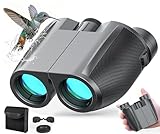
Overview: Marketed as “night vision,” this 12x25 model is actually a compact low-light binocular for casual outdoor use, bundled with accessories for families and beginners.
What Makes It Stand Out: Despite misleading “night vision” claims, its BAK4 prisms and multi-coated optics provide respectable dawn/dusk performance. The twist-up eyecups suit all users, and the ultra-light 0.7lb weight with pocket-friendly foldability stands out for travel.
Value for Money: Excellent value for the bundle (case, strap, cloth), but optics lag behind pricier rivals. Worthwhile for kids or infrequent use, though 12x25 specs offer no advantage over 10x25 competitors.
Strengths and Weaknesses: Strengths: Incredibly portable, comfortable for glasses wearers, comprehensive accessory kit, and waterproof durability. Weaknesses: “Night vision” is inaccurate (only low-light capable); 12x magnification worsens shake; image dimmer than 12x50 models in true darkness.
Bottom Line: A capable entry-level travel companion if you ignore the night vision hype—opt for larger objectives if low-light is critical.
4. 15x55 UHD Binoculars for Adults High Powered with Phone Adapter - Large View, BAK4 Prism, Waterproof, Lightweight for Bird Watching, Hunting, Cruise, Travel, Sports (Blue)

Overview: The 15x55 UHD binoculars blend high magnification with a wide field for versatile outdoor use, featuring a phone adapter for content creators.
What Makes It Stand Out: The 55mm objectives and BAK4 prisms deliver outstanding low-light clarity and a massive 367ft/1000yds view—rare in this class. IPX7 waterproofing/fogproofing and the included phone adapter (for photos/videos) are premium extras at this price point.
Value for Money: Priced mid-range, it outshines similarly sized competitors with superior optics and weatherproofing. The phone adapter adds utility, though results vary by smartphone model.
Strengths and Weaknesses: Strengths: Brilliant edge-to-edge sharpness, exceptional low-light performance, comfortable eye relief, and rugged all-weather build. Weaknesses: Bulky for hiking (needs neck strap), fixed magnification isn’t zoomable, and phone adapter requires steady hands.
Bottom Line: A top-tier choice for birders and travelers prioritizing optical quality—skip if ultralight portability is essential.
5. 20x70 Binoculars for Adults High Powered - WOZEL HD Bird Binoculars with Clear Low Light Vision - Powerful Binocular for Bird Watching Hunting Travel Outdoor Hiking - Christmas Birthday Gifts for Men

Overview: These 20x70 binoculars emphasize extreme magnification and light gathering for dedicated wildlife observation, though their size challenges portability claims.
What Makes It Stand Out: The massive 70mm objectives and BAK4 prisms enable stunning low-light visibility (dawn/dusk), while 20x zoom captures minute details. Fully multi-coated optics eliminate glare, and the rubberized grip ensures stability during critical moments.
Value for Money: Justifies its cost for serious enthusiasts with professional-grade optics, but the 2.8lb weight and 9.7x8.7x3.3in size limit travel practicality. Better suited for stationary use than “hiking” marketing suggests.
Strengths and Weaknesses: Strengths: Unmatched brightness in dim conditions, razor-sharp detail at range, durable waterproof body, and smooth focus mechanism. Weaknesses: Too heavy for all-day carrying; requires tripod for 20x stability; “compact” label is misleading.
Bottom Line: An optical powerhouse for hunters and astronomers—ideal for fixed locations, not backpacking.
6. Nexiview 15x52 HD Binoculars for Adults High Powered - Large & Bright View, Lightweight, IPX7 Waterproof-Binoculars for Hunting Bird Watching Travel,Hiking, Travel, Cruise, Sports with Phone Adapter

Overview: The Nexiview 15x52 HD Binoculars target serious outdoor enthusiasts seeking high magnification and bright, clear optics for demanding activities like hunting, birding, and low-light observation. Their large objective lenses and specialized coatings aim to deliver exceptional image quality in varied conditions. What Makes It Stand Out: Its standout features are the powerful 15x magnification (uncommon in portable binoculars), exceptionally large 26mm eyepieces for comfort and brightness, premium BAK4 prisms ensuring high light transmission (99% reflectivity), and full IPX7 waterproofing/fog-proofing. The included phone adapter adds versatility for capturing distant scenes. Value for Money: Positioned at a mid-to-high price point, it justifies cost through superior optical components (BAK4 prisms, multi-coatings) and robust build quality. While pricier than entry-level 10x42 models, the enhanced magnification, low-light performance, and weather resistance offer significant value for dedicated users needing long-range clarity in harsh environments. Strengths and Weaknesses: Strengths: Outstanding brightness and detail, especially in twilight; excellent low-light capability; very wide field of view; extremely durable and weatherproof; comfortable for extended use. Weaknesses: 15x magnification requires very steady hands or a tripod for prolonged use; larger size/heavier than compact models; premium features come at a higher cost. Bottom Line: Ideal for hunters, avid birders, and serious observers prioritizing maximum detail and low-light performance over portability. Its optical excellence and ruggedness make it a worthwhile investment despite the premium price and stability demands of 15x power.
7. 12x50 UHD Binoculars for Adults High Powered with Upgraded Phone Adapter - Large View, Lightweight, IPX7 Waterproof - Binoculars for Hunting Bird Watching Travel Cruise

Overview: The IBQ 12x50 UHD Binoculars are designed for bird watchers and outdoor adventurers seeking a balance of power, clarity, and portability. They emphasize color accuracy, a wide field of view, and seamless smartphone integration for capturing wildlife moments. What Makes It Stand Out: Key differentiators include specialized high-contrast lens coatings for exceptional color reproduction crucial for bird ID, a user-friendly 2024-upgraded phone adapter compatible with phones in cases, and a solid IPX7 waterproof/fog-proof rating. The 5.8° field of view enhances situational awareness during active observation. Value for Money: Offering strong mid-range value, these binoculars provide high-quality optics suitable for serious birding without the premium price of top-tier brands. The comprehensive accessory kit (bag, strap, cloth, adapter) adds significant practical value, making them a cost-effective package for enthusiasts starting out or seeking reliable performance. Strengths and Weaknesses: Strengths: Excellent color fidelity and contrast for bird identification; very practical, secure phone adapter; robust waterproof construction; complete accessory bundle; comfortable viewing experience. Weaknesses: 12x magnification can be slightly shaky handheld; field of view, while good, isn’t class-leading; build quality feels functional but less premium than higher-priced competitors. Bottom Line: A highly recommended choice for bird watchers and casual hunters who prioritize color accuracy, ease of use with smartphones, and reliable weather resistance. The strong accessory package and focused optical performance deliver excellent value for the price.
8. Hontry Binoculars for Adults and Kids, 10x25 Compact Binoculars for Bird Watching, Theater and Concerts, Hunting and Sport Games
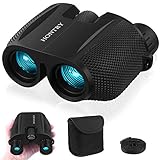
Overview: The Hontry 10x25 Binoculars are ultra-compact, versatile optics designed for everyday portability and family use. They target users needing lightweight, easy-to-carry binoculars suitable for both outdoor adventures and indoor events like concerts or theater. What Makes It Stand Out: Its primary appeal is the exceptional portability (palm-sized, 0.6 lbs) combined with a family-friendly adjustable interpupillary distance (60-75mm). The BAK4 prisms punch above their weight class for low-light performance in a compact form, making them unusually capable for their size across diverse scenarios. Value for Money: Offering outstanding value in the compact category, these binoculars provide solid BAK4 prism optics and surprising low-light capability at a very accessible price point. They outperform many similarly priced plastic compacts, making them ideal for occasional users, families, or as affordable backups without sacrificing essential quality. Strengths and Weaknesses: Strengths: Extremely lightweight and packable; comfortable fit for adults and kids; surprisingly good low-light performance for size; durable rubber armor; versatile for indoor/outdoor use. Weaknesses: Smaller 25mm objective lenses limit maximum light gathering in very dark conditions; 10x magnification can be challenging to hold steady for extended periods; field of view is narrower than larger models. Bottom Line: The top recommendation for portable, family-friendly binoculars. Perfect for stashing in a glove box, backpack, or purse for spontaneous use at events, quick hikes, or backyard birding, delivering reliable performance where size and weight matter most.
9. Compact Binoculars for Adults and Kids, HD Mini Portable Outdoor Binoculars Children, Pocket Lightweight Folding for Bird Watching, Hunting, Concert, Theater, Opera, Traveling, Tourism, Shows

Overview: This ultra-compact binocular set focuses on extreme portability and broad accessibility for both adults and children. Marketed as pocket-sized HD optics, they aim to be the go-anywhere companion for casual observation across numerous activities. What Makes It Stand Out: Its defining feature is the minuscule size and weight (5.3 oz), fitting easily in a pocket. The inclusion of “Glimmer Night Vision” (marketing for low-light capability) and a claimed 126m/1000m wide field of view at 12x magnification are notable, alongside a rugged, non-slip rubber-armored aluminum body promising durability. Value for Money: Positioned as a budget-friendly compact option, it offers basic functionality and surprising portability. However, the exaggerated “night vision” claim and lower-quality optics compared to similarly priced competitors (like Hontry or Aurosports) slightly diminish its value proposition despite the low cost. Strengths and Weaknesses: Strengths: Unbeatable pocketability; very lightweight; includes essential accessories (case, strap, cloth); durable rubber armor; versatile for casual use cases. Weaknesses: “Night Vision” is misleading marketing (standard low-light performance); 12x magnification is difficult to stabilize in such a small housing; optical clarity and color fidelity are average at best; field of view likely narrower than claimed. Bottom Line: A decent, very affordable option purely for casual, short-duration use where pocket size is the absolute priority (e.g., quick glances at concerts or travel). Manage expectations regarding true low-light performance and image quality compared to slightly larger compacts.
10. Aurosports 10x25 Binoculars for Adults and Kids, Large View Compact Binoculars for Bird Watching, Easy Focus Small Binocular with Low Light - Ideal for Theater Concerts Travel Hunting Hiking
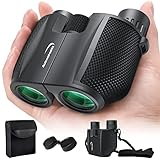
Overview: The Aurosports 10x25 Binoculars are compact, lightweight optics designed for effortless everyday use by the whole family. They emphasize ease of focus, low-light capability, and durability for activities ranging from theater visits to casual birding and travel. What Makes It Stand Out: Key strengths are the exceptionally light weight (0.5 lbs), ergonomic rubberized grip, and simplified 3-step focusing system ideal for kids and beginners. The combination of BAK4 prisms, multi-coated lenses, and a daily waterproof/anti-fog rating in such a small, affordable package is impressive for its class. Value for Money: Represents excellent value, delivering core features expected in higher-priced compacts (BAK4 prisms, decent low-light performance, weather resistance) at a very competitive price. The inclusion of essential accessories and family-focused design makes it a practical, cost-effective choice for casual users and gift-giving. Strengths and Weaknesses: Strengths: Superbly lightweight and comfortable; very easy and fast focusing; good low-light performance for size; durable and weather-resistant rubber armor; excellent value; perfect size for kids and adults. Weaknesses: Smaller objective lenses limit extreme low-light use; field of view is modest; build quality is functional but not luxurious. Bottom Line: Highly recommended as the best all-around compact binocular for families and casual users. Its unbeatable blend of light weight, ease of use, solid optical performance, and durability makes it ideal for travel, events, and light outdoor use without breaking the bank.
Understanding Your Casual Observation Needs
Before diving into technical specs, it’s crucial to define what “casual outdoor use” actually means for you. This self-assessment is the bedrock of a smart purchase. Are you primarily watching birds in your local park, where quick focus on moving subjects and decent close-range clarity are key? Or are you more likely to be scanning distant landscapes from a hiking trail, where a wider field of view and stable image become more important? Maybe your main use is casual stargazing on clear nights, demanding different considerations than daytime viewing. Understanding your primary activity helps prioritize features and avoid paying for capabilities you’ll never use. Don’t overcomplicate it – think about where you’ll use them most often and what frustrates you about not having binoculars right now.
Defining “Casual” in Practical Terms
“Casual” typically means intermittent use, perhaps several times a month or even just weekly, rather than daily professional application. It often involves shorter observation sessions – watching a deer cross a meadow, identifying a hawk overhead, or enjoying a sunset. Durability needs are generally lower than for expedition use; you likely won’t be subjecting them to extreme weather, constant rough handling, or multi-week wilderness trips. Comfort for short to medium periods is paramount, but extreme lightweight design for all-day carrying might be less critical. Recognizing these parameters helps set realistic expectations for performance and build quality within the budget constraint.
Common Scenarios and Their Optical Demands
Different casual activities place unique demands on binoculars. Backyard birdwatching often requires good close focus (the minimum distance you can focus sharply) and quick, responsive focusing mechanisms to track birds hopping between branches. Scenic viewing from viewpoints benefits greatly from a wide field of view to take in expansive landscapes without constant panning. Sporting events, like watching a local game from the bleachers, need bright images in variable stadium lighting and sufficient magnification to see player details. Boat watching might prioritize waterproofing and fog resistance due to the marine environment. Matching your specific scenario to these optical characteristics prevents disappointment later.
Demystifying Key Binocular Specifications
The numbers stamped on binoculars – like 8x42 or 10x25 – are fundamental, but their meaning and importance can be misunderstood, especially on a budget. These two numbers represent magnification power and objective lens diameter (in millimeters). Magnification (the first number) tells you how much closer the object appears; 8x makes it look 8 times closer. The objective lens diameter (the second number) determines how much light the binoculars can gather, directly impacting image brightness, especially in low light. However, higher magnification isn’t always better, and larger objectives mean heavier, bulkier binoculars. For casual use under $100, finding the right balance for your needs is far more important than chasing the highest numbers.
Magnification: Finding the Sweet Spot
For most casual observers, magnification between 7x and 10x is the practical sweet spot. Magnifications below 7x (like 6x) might not bring distant objects close enough for satisfying detail, while magnifications above 10x (like 12x) become significantly harder to hold steady without a tripod, leading to a shaky, tiring viewing experience. Hand tremors are magnified along with the image. At the $100 price point, 8x or 10x models are most common and generally offer the best compromise between bringing subjects closer and maintaining a stable, usable image for handheld viewing during typical casual observation sessions.
Objective Lens Size: Light Gathering Power
The objective lens size (e.g., the “42” in 8x42) is critical for image brightness. Larger lenses gather more light, resulting in brighter, clearer images, particularly during dawn, dusk, or in shaded forest areas. However, larger lenses also mean heavier binoculars and often larger, bulkier bodies. For true portability and comfort during casual use, 25mm to 32mm objective lenses are very common in compact models, while 36mm to 42mm offer better low-light performance in slightly larger, but still manageable, sizes. Under $100, 8x42 often represents an excellent balance of light-gathering ability and usability for general outdoor viewing, though compact 8x25 or 10x25 models are popular for extreme portability.
The Critical Role of Prism Systems
Inside every pair of binoculars, prisms are essential for correcting the inverted and reversed image projected by the objective lenses, delivering an upright, true-to-life view. The two main types found in consumer binoculars are Porro prism and Roof prism. Understanding the difference is key, especially at budget price points. Porro prisms (where the eyepieces are offset inward from the objective lenses, creating a “zig-zag” shape) are generally simpler to manufacture. Roof prisms (where the eyepieces and objective lenses are in a straight line) allow for a more streamlined, compact design but require more precise manufacturing and special coatings to match Porro prism performance. Under $100, Porro prism designs often offer better optical performance for the price, while Roof prism designs prioritize sleekness and durability.
Porro vs. Roof: Budget Implications
At the sub-$100 price point, Porro prism binoculars frequently provide superior image brightness and edge-to-edge sharpness compared to similarly priced Roof prism models. This is because the Porro design is inherently less expensive to produce to a decent optical standard. Roof prism binoculars in this range often require cost-cutting elsewhere (like simpler coatings or lower-quality glass) to hit the price target, which can impact image quality. However, Roof prism designs are typically more robust, better sealed against moisture and dust, and have a more modern, ergonomic feel. Your choice here often boils down to prioritizing pure optical performance (leaning towards Porro) or a more compact, potentially more durable build (leaning towards Roof) within your budget constraints.
Phase Coating: A Roof Prism Necessity
For Roof prism binoculars to perform well optically, a specific anti-reflective treatment called phase correction coating is essential. Without it, the image can lose contrast and appear slightly soft. Unfortunately, this coating adds manufacturing cost. In the budget segment, many Roof prism binoculars either lack proper phase coating or use a lower-grade version, which is a primary reason their optical performance often lags behind Porro prism counterparts at the same price. Be aware that specs might not explicitly state “phase coating” at this level; it’s often an area where corners are cut. If optical clarity is your top priority under $100, Porro prism designs generally offer a safer bet.
Field of View: Seeing More of the Picture
Field of View (FOV) is a crucial, yet often overlooked, specification. It refers to the width of the area you can see through the binoculars at a specific distance, usually measured in feet at 1000 yards or meters at 1000 meters. A wider FOV makes it easier to locate moving subjects (like birds), track them smoothly, and take in sweeping landscapes without constant panning. It contributes significantly to a more immersive and less disorienting viewing experience. FOV is inversely related to magnification – higher magnification typically results in a narrower field of view. For casual observation, especially involving moving subjects or scenic vistas, a wider FOV is generally more desirable than maximum magnification.
Why Width Matters for Casual Observers
Imagine trying to follow a squirrel darting through trees with binoculars that have a very narrow tunnel-like view. It’s frustrating and you’ll lose the subject constantly. A wider field of view makes this kind of casual, dynamic observation much more enjoyable and successful. It also reduces the “jello effect” or image shake that can be more noticeable with higher magnification, as small hand movements don’t cause the entire scene to whip across your vision as dramatically. For general-purpose casual use – birding in parks, scenic overlooks, sporting events – prioritizing a decently wide FOV often leads to a more satisfying and less fatiguing experience than squeezing out that last bit of magnification.
Balancing Magnification and Field of View
This is where understanding the trade-off is vital. An 8x binocular will almost always have a wider FOV than a 10x model with the same objective lens size. If you frequently observe active subjects or want a more encompassing view of landscapes, the 8x model, despite bringing things slightly less close, will likely feel more natural and easier to use. Conversely, if you’re primarily viewing relatively static, distant objects (like observing ships far out at sea), the extra magnification of 10x might be worth the narrower view. For the most versatile casual experience under $100, 8x models often strike the best balance, offering a good FOV combined with usable magnification.
Weight and Ergonomics: Holding Comfort Matters
Binoculars you can’t comfortably hold for more than a minute are useless, no matter how good the optics. Weight and ergonomics are paramount for casual enjoyment. Budget models often use plastic housings and chassis to keep costs down, which significantly reduces weight compared to metal-bodied counterparts. While plastic might feel less premium, the weight savings are substantial and contribute greatly to comfort during extended, albeit casual, viewing sessions. Consider where and how you’ll carry them – stuffed in a pocket, hanging around your neck, or kept in a daypack. Lighter is almost always better for spontaneous use.
The Importance of Grip and Balance
How the binoculars feel in your hands is critical. Look for models with textured rubber armor that provides a secure, non-slip grip, even with slightly damp or cold hands – a common occurrence outdoors. The shape should fit naturally, allowing your fingers to wrap comfortably around the barrels without strain. Well-balanced binoculars, where the weight feels centered in your hands rather than tipping forward or backward, reduce hand fatigue significantly. Under $100, pay close attention to user reviews mentioning comfort and grip; it’s a make-or-break factor that specs can’t fully convey. A slightly heavier model with excellent ergonomics might be more comfortable long-term than an ultra-light one that’s awkward to hold.
Neck Strap Considerations
Never underestimate the importance of the included neck strap, especially for casual users who might wear binoculars around their neck for extended periods. Budget models often come with thin, narrow straps that dig into your shoulders and become uncomfortable quickly. Look for models that either include a wider, padded strap or are compatible with standard aftermarket straps (most are). Investing a few extra dollars in a comfortable, wide strap is one of the best value-adds you can make for casual, all-day carrying. It transforms the experience from a chore to a pleasure.
Weatherproofing and Durability for Everyday Adventures
Casual outdoor use doesn’t mean your binoculars will always stay in perfect, dry conditions. A sudden shower, morning dew, or high humidity can quickly ruin unprotected optics. Basic weather resistance is a highly desirable feature, even on a budget. The terms “water-resistant” and “waterproof” have specific meanings. True waterproofing (often indicated by O-ring seals) means the binoculars can be submerged briefly without internal fogging or water ingress. Water-resistant models might withstand light rain or splashes but aren’t sealed against fogging due to temperature changes. Fog-proofing, usually achieved by purging the housing with nitrogen or argon gas, prevents internal lens fogging when moving between different temperatures – a common issue when taking binoculars from a warm car into cool morning air.
Evaluating Real-World Protection Under $100
Achieving true waterproof and fog-proof (WPF) construction adds cost. Under $100, many binoculars are marketed as “water-resistant” or “weather-resistant,” which typically means they have some basic seals but aren’t fully tested for submersion. True WPF models in this range are less common but do exist, often as a key selling point. If you live in a humid climate, frequent coastal areas, or simply want peace of mind against unexpected drizzle, prioritizing models explicitly labeled waterproof and fog-proof is wise. Read the fine print on the manufacturer’s description; “splash-proof” is not the same as “waterproof.” For casual use where you might encounter light moisture, WPF is a worthwhile feature to seek out if the budget allows.
Build Quality Expectations on a Budget
Don’t expect tank-like durability from sub-$100 binoculars. The focus should be on adequate durability for casual handling – surviving being knocked around in a daypack, occasional bumps, and exposure to typical outdoor elements. Plastic construction is standard here and is actually beneficial for weight. The quality of the rubber armor matters; it should be substantial enough to protect the housing from scratches and dings, not just a thin, flimsy coating. Check reviews for mentions of build quality – phrases like “feels solid for the price” or “plastic feels a bit cheap but functional” are common. Avoid models described as “flimsy” or “feels like it might break.” Solid construction ensures your investment lasts beyond just a few outings.
Optical Coatings: More Than Just Marketing Hype
Lens coatings are thin layers applied to lens and prism surfaces to reduce light reflection and increase light transmission. Uncoated glass can lose over 50% of incoming light through reflection at each air-to-glass surface! Even basic coatings make a massive difference in image brightness, contrast, and color fidelity. The level of coating is often described: Coated (single layer on at least one surface), Fully Coated (single layer on all surfaces), Multi-Coated (multiple layers on at least one surface), and Fully Multi-Coated (multiple layers on all surfaces). Fully Multi-Coated (FMC) is the gold standard, maximizing light transmission and image quality.
Why Coatings Matter Most at Lower Price Points
This is critically important under $100. High-quality glass is expensive, so budget manufacturers often use lower-grade optical glass. The primary way they compensate (and the main differentiator between mediocre and good budget binoculars) is through the quality and comprehensiveness of the lens coatings. A pair with FMC coatings on decent (but not premium) glass will almost always outperform a pair with poor or minimal coatings on slightly better glass, especially in lower light. Don’t be swayed by vague terms like “premium coatings”; look specifically for “Fully Multi-Coated” in the description. This single feature often has the biggest impact on real-world image quality within this price bracket.
Identifying Genuine Coating Quality
Marketing can be tricky. “Multi-coated” might only mean the eyepieces have multiple coatings, while other surfaces have single or no coatings. “Fully multi-coated” should mean all air-to-glass surfaces have multiple anti-reflective layers. Unfortunately, at the budget level, specifications aren’t always transparent. User reviews focusing on image brightness and clarity, especially in challenging light, are invaluable. Look for comments like “surprisingly bright for the price” or “good color rendition,” which often indicate decent coatings. Be skeptical of binoculars boasting extremely high magnification or huge objective lenses at a very low price – the coatings (and glass) are almost certainly subpar, leading to dim, low-contrast images.
Close Focus: Seeing the Details Up Close
Close focus distance is the minimum distance at which the binoculars can still focus sharply on an object. For casual observers, this spec is more relevant than many realize. Watching insects, butterflies, or small birds at relatively close range in your garden or on a nature trail requires a decent close focus. A shorter close focus distance (e.g., 6 feet instead of 15 feet) allows you to observe intricate details of nearby subjects without having to back away. While not the top priority for all casual uses (like distant landscape viewing), a close focus under 10 feet adds significant versatility, especially for those interested in closer natural subjects.
Practical Applications for Casual Users
Imagine trying to focus on a beautiful dragonfly perched on a reed just 8 feet away. Binoculars with a close focus of 15 feet would be useless in this scenario, leaving you with a frustratingly blurry image. Similarly, observing small wildlife like lizards, frogs, or even detailed flowers benefits greatly from a shorter close focus. If your casual outings often involve exploring gardens, parks, or trails where subjects might be relatively near, prioritizing a close focus distance of 8 feet or less dramatically increases the usefulness of your binoculars beyond just distant viewing. It transforms them from simple distance magnifiers into versatile observation tools.
Balancing Close Focus with Other Features
Achieving a very short close focus (under 5 feet) often requires more complex optical design, which can increase cost and sometimes slightly compromise edge-of-field sharpness at infinity. Under $100, close focus distances typically range from 6 feet to 15+ feet. For general casual use, a close focus between 6 and 10 feet is an excellent sweet spot, offering significant versatility without major trade-offs. Don’t chase the absolute shortest close focus if it means sacrificing image quality, brightness, or ergonomics – but do avoid models with excessively long close focus (over 12 feet) if you anticipate any close-range observation.
Exit Pupil and Twilight Factor: Low-Light Performance Simplified
Two related specifications – Exit Pupil and Twilight Factor – provide insight into how well binoculars perform in lower light conditions (dawn, dusk, deep shade), though they are often overemphasized for casual daytime use. Exit Pupil is calculated by dividing the objective lens diameter by the magnification (e.g., 42 / 8 = 5.25mm). It represents the diameter of the beam of light exiting the eyepiece and entering your eye. A larger exit pupil (ideally matching or exceeding your eye’s pupil size in low light, which diminishes with age) generally means a brighter image. Twilight Factor combines magnification and objective size (square root of [Mag x Obj Lens]) and is meant to indicate detail resolution in low light, though its practical usefulness is debated.
Realistic Expectations for Budget Optics in Low Light
Under $100, manage your expectations for true low-light performance. While a larger exit pupil (e.g., 5mm from 8x40s) will be brighter than a smaller one (e.g., 2.5mm from 10x25s), the quality of the glass and, critically, the lens coatings have a massive impact. Poor coatings can negate the theoretical brightness advantage of a larger exit pupil. Budget binoculars simply lack the premium glass and advanced coatings of high-end models, so their low-light capability will be limited compared to brighter daylight performance. They will work at dusk or dawn, but don’t expect stunningly bright, detailed views like you’d get from much more expensive optics. Focus on coated glass quality (FMC) as the best indicator within budget.
Prioritizing Daylight Performance
For the vast majority of casual outdoor use – which happens during daylight hours – exit pupil and twilight factor are far less critical than factors like overall image brightness (heavily influenced by coatings), field of view, and comfort. Spending mental energy optimizing for theoretical low-light performance at this price point is usually less productive than ensuring solid daylight optics, a comfortable FOV, and ergonomic design. Choose based on your primary daytime needs; the low-light capability will be what it is, largely determined by the objective lens size and coating quality within the budget constraints.
Eye Relief: Comfort for Eyeglass Wearers
Eye relief is the distance your eyes can be from the eyepiece lens while still seeing the full field of view. It’s measured in millimeters. For people who wear glasses, sufficient eye relief (typically 14mm or more) is essential. Without it, the eyecups force your eyes too far back, causing “vignetting” – a dark ring around the edge of the view, significantly reducing the usable field of view and making observation uncomfortable and tiring. Even non-eyeglass wearers benefit from adequate eye relief (12mm+) for comfort during extended viewing, as it allows a more relaxed viewing position.
Identifying Adequate Eye Relief
Check the specifications carefully. Budget binoculars sometimes skimp on eye relief, especially higher magnification models (like 10x) which naturally have shorter eye relief. Look for a stated eye relief of at least 15mm if you wear glasses; 18mm+ is ideal. Twist-up or fold-down eyecups are almost standard now and are crucial – they allow you to position the eyecup correctly whether you wear glasses or not. If the specs don’t list eye relief, search user reviews specifically from eyeglass wearers. Comments like “great for glasses” or “needed to twist up the cups fully” are positive signs. Avoid models where reviewers mention significant vignetting when wearing glasses.
The Eyecup Factor
The design and usability of the eyecups themselves matter. Twist-up eyecups should move smoothly and lock securely in both the up (for glasses) and down (for non-glasses) positions. Roll-down rubber eyecups are also common and generally effective, but ensure they roll up and down reliably without tearing. Cheap, stiff, or flimsy eyecups are a common complaint on budget models and significantly impact comfort for glasses wearers. If possible, try binoculars in-store to test the eyecups with your glasses on, or prioritize models with consistently positive reviews regarding eyecup comfort for glasses wearers.
Setting Realistic Budget Expectations
Spending under $100 sets clear boundaries for what’s achievable. It’s vital to understand what you can and cannot reasonably expect at this price point to avoid disappointment. You absolutely can find binoculars that provide clear, bright enough images for daytime viewing, are reasonably comfortable to hold, offer basic weather resistance, and will last for casual use over several years. What you generally cannot expect is the exceptional edge-to-edge sharpness, the stunning color fidelity, the rock-solid metal construction, or the exceptional low-light performance of premium models costing hundreds more. Think of it as getting reliable, functional performance rather than optical perfection.
Where Budgets Typically Go
Manufacturing costs are allocated across materials, optics, coatings, assembly, and features. Under $100, significant savings come from:
- Plastic Housings: Instead of metal (lighter, cheaper, but less durable).
- Standard Optical Glass: Instead of premium, extra-low dispersion glass (can lead to slight color fringing).
- Basic Coatings: Often single-layer or limited multi-coating instead of full multi-coating on all surfaces (impacts brightness/contrast).
- Simplified Prism Alignment: Especially for Roof prisms, leading to potential image quality compromises.
- Basic Weather Sealing: Often water-resistant rather than fully waterproof/fog-proof. Recognizing these compromises helps you evaluate reviews and specs realistically. Focus on which compromises are acceptable for your specific casual use.
Value vs. Absolute Lowest Price
Resist the urge to buy the absolute cheapest pair available. Spending closer to the $80-$100 mark within this bracket often yields significantly better optical quality, build, and features (like better coatings or basic waterproofing) than models under $50. The jump in performance between a $40 and an $85 pair is usually much more dramatic than between an $85 and a $200 pair. Investing that extra $20-$40 often pays off in greater enjoyment and longevity. Look for models consistently praised for “punching above their weight” in optical performance within the $70-$100 range.
Essential Care and Maintenance Tips
Even budget binoculars will last longer and perform better with basic care. Proper maintenance is simple but crucial for casual users who might not think about it regularly. Always use the provided lens caps when not in use – scratches on the objective lenses are far more damaging than on eyepieces. Clean lenses only when necessary, using a proper microfiber cloth designed for optics (never your shirt sleeve!). Blow off loose dust first with a blower brush or gentle breath. For stubborn smudges, breathe lightly on the lens to create moisture and wipe very gently in a circular motion. Avoid harsh chemicals; plain water or a dedicated optical cleaning fluid sparingly applied to the cloth is sufficient. Store them in a cool, dry place, preferably in their case.
Protecting Your Investment
The included case, while often basic, serves an important purpose. Use it for storage and transport to protect the binoculars from scratches, impacts, and dust. If the strap is uncomfortable (a common issue), replace it with a wider, padded one – it’s a small investment that greatly enhances usability. Avoid leaving binoculars in a hot car, as extreme heat can damage seals and adhesives over time. If they get wet, wipe them down with a soft cloth and let them air dry completely (lens caps off) before storing. For water-resistant models, rinsing with fresh water after exposure to salt spray or heavy rain is wise. Simple habits like these significantly extend the life of even budget-friendly optics.
When to Seek Professional Service (and When Not To)
Under $100 binoculars are generally not economical to repair if they malfunction (e.g., broken focus mechanism, severe internal fogging indicating seal failure). The cost of professional servicing often exceeds the price of a new pair. Prevention through proper care is key. However, if internal fogging occurs immediately after purchase, it likely indicates a manufacturing defect, and you should seek a replacement under warranty. For most casual users, treating budget binoculars as a semi-disposable item with a lifespan of a few years of regular use is realistic, provided they are cared for reasonably well. Focus on maximizing their usable life through gentle handling and storage.
Future-Proofing Your Purchase
While you’re buying for today’s casual needs, considering potential future interests can add value. Does the model you’re looking at have features that might support slightly more involved activities later? For instance, a model with decent close focus might open up interest in closer wildlife observation. Basic waterproofing could encourage more frequent use in varied conditions. Compatibility with standard tripods (via a cheap adapter often included or easily added) might be useful if you ever want more stable viewing for extended periods, even if you don’t plan on it now. While not essential, these small considerations can extend the useful life of your binoculars as your casual hobbies potentially evolve.
Compatibility Considerations
Check if the binoculars have standard mounting threads for tripods – many do, even budget models, often hidden under a small cover on the bridge. This simple feature adds significant versatility later. Ensure the eyecups are compatible with your glasses if you wear them, as this is non-negotiable for comfort. Consider how the size and weight fit with your existing outdoor gear; will they easily slip into your usual daypack pocket? While not “future-proofing” in a technical sense, choosing a pair that integrates seamlessly into your current outdoor routine makes you far more likely to actually use them consistently, which is the ultimate goal for casual observation.
Knowing When to Upgrade
Understand that your first pair under $100 is a fantastic starting point. As your interest deepens – perhaps you find yourself birding more frequently or wanting clearer views at greater distances – you’ll naturally develop a better sense of what features matter most to you. This initial experience is invaluable for making a more informed upgrade decision later. Don’t feel pressured to get “the perfect pair” right now; focus on getting a pair that reliably enhances your current casual activities without frustration. The knowledge gained from using your first pair is often the best preparation for a future, more specialized investment when the time is right.
Frequently Asked Questions
Frequently Asked Questions
What’s the most important feature to prioritize for casual birdwatching under $100? For casual birdwatching, a good balance of 8x magnification, a decent field of view, and Fully Multi-Coated optics are most crucial. This combination provides enough closeness, makes tracking moving birds easier, and ensures the brightest, clearest image possible within the budget for reliable daytime identification.
Can I realistically find waterproof and fog-proof binoculars under $100? Yes, it’s possible, but they are less common than water-resistant models at this price. Look explicitly for “waterproof and fog-proof” (WPF) in the description, not just “water-resistant.” Be prepared that WPF models might have slightly less optical refinement than non-WPF models at the same price point, but the peace of mind against moisture is often worth it.
How do I know if the lens coatings are actually good on a budget pair? Prioritize models explicitly stating “Fully Multi-Coated” (FMC) optics. Read user reviews focusing on image brightness and clarity, especially comments like “surprisingly bright” or “good color.” Avoid vague terms like “premium coatings” without specifics. FMC is the single biggest indicator of decent light transmission under $100.
Are Porro prism binoculars really better than Roof prism under $100? Generally, yes, for pure optical performance. Porro prism designs are simpler to manufacture well at low cost, often delivering brighter, sharper images than similarly priced Roof prism models, which require more precise (and costly) manufacturing and coatings to perform well. However, Roof prism models usually offer a more compact, streamlined design and potentially better durability.
Why do some cheap binoculars give me a headache or eye strain? This is often caused by poor optical alignment (collimation) or insufficient eye relief, especially for glasses wearers. Budget models can sometimes have alignment issues out of the box. If you wear glasses, ensure the binoculars have adequate eye relief (15mm+). Also, using too high magnification (like 12x) can cause strain due to image shake; 8x or 10x is usually more comfortable.
Is a wider field of view always better for casual use? For most casual scenarios involving moving subjects (birds, sports) or scenic landscapes, yes, a wider field of view is highly beneficial as it makes locating and tracking subjects easier and reduces image shake perception. However, if your primary use is viewing very distant, static objects (like ships at sea), a slightly narrower FOV with higher magnification might be preferable, though 8x usually offers the best overall balance.
Do I need binoculars with a very short close focus for casual use? Not strictly necessary, but highly recommended for versatility. A close focus under 10 feet allows you to observe insects, butterflies, or small wildlife at closer range in gardens or parks, significantly expanding what you can comfortably view. Models under $100 with close focus between 6-10 feet offer the best practical value for general casual observation.
How important is the weight for casual, intermittent use? Very important for comfort and likelihood of use. Lighter binoculars (often using plastic construction) are much more pleasant to carry in a pocket or around your neck for spontaneous viewing. Heavy binoculars become a chore to carry, meaning you’re less likely to take them along. Prioritize models under 20 ounces for true casual portability.
What’s the biggest mistake people make when buying cheap binoculars? Chasing the highest magnification (e.g., 12x) or largest objective lenses (e.g., 50mm) advertised at a very low price. This almost always means severely compromised optics (poor glass, minimal coatings), resulting in dim, blurry, low-contrast images. Sticking with 7x-10x magnification and 25mm-42mm objectives, prioritizing FMC coatings, yields vastly better real-world performance under $100.
How long should a decent pair of budget binoculars last for casual use? With reasonable care (using lens caps, storing dry, avoiding major impacts), expect 2-5 years of regular casual use. They aren’t built for decades of heavy use like premium models, but they aren’t disposable either. Failure points are often the focus mechanism wearing out, internal fogging from seal failure, or cosmetic damage. Proper maintenance significantly extends their usable life.
Related Buying Guides
- 10 Best Value Binoculars for Outdoor Enthusiasts Seeking Performance and Price Balance in 2026
- 10 Best Value Full Size Binoculars for Serious Outdoor Enthusiasts in 2026
- 10 Affordable Binoculars That Don’t Sacrifice Quality in 2026
- 10 Affordable Hunting Binoculars That Don’t Sacrifice Quality in 2026
- 10 Affordable Porro Prism Binoculars That Don’t Sacrifice Quality in 2026