Table of Contents
Ever peered through a pair of binoculars only to be greeted by a blurry, shaky mess that made you question if the birds were even real? You’re not alone. Starting your journey into the world of optics can feel overwhelming, with a dizzying array of numbers, sizes, and technical jargon promising the moon but often delivering confusion. The truth is, the perfect pair for a beginner isn’t necessarily the most expensive or the one with the highest magnification – it’s the one that works for your hands, your eyes, and your intended adventures, whether that’s spotting backyard birds, catching stadium action, or gazing at the night sky. Getting this foundational choice right transforms frustration into pure, unadulterated wonder.
Forget the pressure of picking a “winner” from an endless list. The real key to beginner success lies in understanding a handful of core optical principles and ergonomic factors. It’s about matching the tool to the task and the user, not chasing specs that sound impressive but might actually hinder your experience. This guide cuts through the marketing noise, focusing squarely on the essential features you need to evaluate to find binoculars that feel like a natural extension of your vision, not a wrestling match. Let’s unlock the clarity you deserve, starting with the fundamentals that truly matter for someone just starting out.
Top 10 Binoculars for Beginners
Detailed Product Reviews
1. Occer 12x25 Compact Binoculars for Adults and Kids, Large Eyepiece Waterproof Binocular with Low Light Vision,High Powered Easy Focus Binoculars for Bird Watching,Outdoor Hunting,Travel,Sightseeing

Overview:
The Occer 12x25 binoculars deliver portability and versatility for casual outdoor enthusiasts. With 12x magnification and a 25mm objective lens, they prioritize wide-field viewing (273ft/1000yds) for activities like birding, travel, and concerts. Designed for all ages, they incorporate waterproofing and low-light usability.
What Makes It Stand Out:
Its large 15mm eyepieces and adjustable rubber eyecups cater exceptionally well to eyeglass wearers, offering comfortable viewing without vignetting. The FMC broadband coating and BAK4 prisms enhance image clarity and color accuracy beyond typical budget models, while the compact, palm-sized ABS body ensures effortless one-handed use.
Value for Money:
Priced accessibly, these outperform many entry-level rivals with superior optics and thoughtful ergonomics. Though not as rugged as premium brands, the included strap and rubber armor justify the cost for occasional users seeking reliable performance across diverse scenarios—from hiking to theater visits.
Strengths and Weaknesses:
Strengths: Excellent eye relief for glasses wearers; bright, color-accurate images; ultralight and pocketable; family-friendly sizing. Weaknesses: 12x magnification amplifies hand shake; low-light capability limited to dusk (not true night vision); plastic build feels less durable than metal alternatives.
Bottom Line:
Ideal for beginners and families wanting a fuss-free, portable binocular. While not suited for extreme conditions, its balance of comfort, clarity, and value makes it a top pick for everyday adventures under $50.
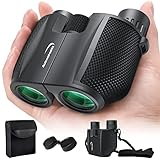
2. Aurosports 10x25 Binoculars for Adults and Kids, Large View Compact Binoculars for Bird Watching, Easy Focus Small Binocular with Low Light - Ideal for Theater Concerts Travel Hunting Hiking
Overview:
Aurosports’ 10x25 binoculars target users seeking simplicity and portability. Weighing just 0.5lbs, they offer 10x magnification for theater, travel, or casual wildlife observation. The compact design and shockproof silicone casing appeal to families and on-the-go adventurers.
What Makes It Stand Out:
The BAK4 prisms and multi-coated lenses punch above their price point, delivering notably bright, distortion-free images even at twilight. The 3-step focus system is intuitive for kids, while the ergonomic grip and anti-fog coating ensure reliability in varied weather without bulk.
Value for Money:
At a budget-friendly price, these excel as multipurpose tools. They undercut pricier brands while matching optical quality for daylight use, though low-light performance lags behind larger models. The included carry strap and holiday-ready packaging enhance gifting appeal.
Strengths and Weaknesses:
Strengths: Featherlight and ultra-portable; crisp daytime optics; simple focus ideal for children; waterproof and fog-resistant. Weaknesses: Narrow field of view (239ft/1000yds); eye relief insufficient for some glasses users; 10x power lacks reach for serious birding.
Bottom Line:
A stellar choice for travelers, concertgoers, or parents buying their child’s first binoculars. Compromises in magnification and low-light use are fair trade-offs for its unbeatable portability and ease of use.
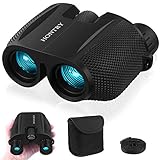
3. Hontry Binoculars for Adults and Kids, 10x25 Compact Binoculars for Bird Watching, Theater and Concerts, Hunting and Sport Games
Overview:
Hontry’s 10x25 binoculars emphasize everyday practicality, weighing 0.6lbs with a palm-sized profile. The 10x magnification balances usability and stability, targeting casual users for birding, sports, or travel. Its standout feature is universal fit for all ages.
What Makes It Stand Out:
The adjustable interpupillary distance (60–75mm) accommodates children and adults seamlessly—a rarity in compact models. The BAK4 prisms ensure rich 3D depth perception, while the wide IPD range makes shared family outings effortless without constant refocusing.
Value for Money:
Competitively priced, these justify cost through exceptional versatility. They outshine similarly sized rivals with robust low-light clarity and a design encouraging daily use (e.g., glove-box storage). Not built for expedition-grade abuse, but perfect for routine adventures.
Strengths and Weaknesses:
Strengths: Best-in-class IPD range for families; stable 10x magnification reduces shake; durable rubber coating; bright images in dim settings. Weaknesses: Smaller objective lens limits extreme low-light use; basic carrying case; no tripod compatibility.
Bottom Line:
The top recommendation for households wanting one pair for all ages. Prioritizes user-friendliness over high-power performance, making it a reliable “always with you” optic for under $40.
4. 20x50 High Powered Binoculars for Adults, Waterproof Compact Binoculars with Low Light Vision for Bird Watching Hunting Camping Travel Cruise Hiking Sports Stargazing, Christmas Birthday Gifts for Men

Overview:
These 20x50 binoculars target serious hobbyists with high magnification (20x) and large 50mm objectives for exceptional light gathering. Designed for hunting, stargazing, or marine use, they prioritize detail at distance but sacrifice portability.
What Makes It Stand Out:
The 20x power reveals intricate details up to 1,000 yards away, while the 26mm ergonomic eyepiece minimizes eye strain during extended sessions. BAK4 Porro prisms and FMC coatings achieve 99.8% light transmission—rare in this class—yielding stunning color fidelity and low-light clarity.
Value for Money:
Mid-range priced for their capabilities, they outperform cheaper 20x models with superior optics and waterproofing. Heavier than compacts (1.8lbs), but the included strap and rugged rubber armor justify cost for dedicated outdoor enthusiasts.
Strengths and Weaknesses:
Strengths: Outstanding long-range detail; exceptional low-light brightness; comfortable viewing; argon-purged waterproofing. Weaknesses: Heavy and bulky (not pocketable); 20x magnification requires tripod for stability; steep learning curve for beginners.
Bottom Line:
A must for hunters or astronomers needing maximum daylight reach. Skip if you prioritize portability—but for $100–$150, it’s unmatched for clarity and power in its category.
5. 15x55 UHD Binoculars for Adults High Powered with Phone Adapter - Large View, BAK4 Prism, Waterproof, Lightweight for Bird Watching, Hunting, Cruise, Travel, Sports (Blue)

Overview:
Hontry’s 15x55 UHD binoculars merge high power (15x) with a massive 55mm objective lens for immersive viewing. Targeting travelers and photographers, they include a phone adapter for capturing distant scenes, balancing performance with modern functionality.
What Makes It Stand Out:
The 8° wide-angle field (367ft/1000yds) combats tunnel vision common in high-mag optics, while IPX7 waterproofing and argon purging ensure reliability in storms. The included phone adapter lets users snap photos through the eyepiece—a unique perk for casual content creators.
Value for Money:
Priced higher than compacts, the UHD optics, weatherproofing, and adapter kit deliver professional-grade features. Though heavier (1.9lbs), the twist-up eyecups and ergonomic grip enhance comfort during prolonged use, outclassing rivals near $200.
Strengths and Weaknesses:
Strengths: Brilliant wide-field views; superb low-light performance; phone adapter adds creative utility; fogproof argon filling. Weaknesses: Bulky for hiking; fixed 15x magnification limits flexibility; blue finish attracts fingerprints.
Bottom Line:
The premier choice for photographers and cruisers wanting to document adventures. Sacrifices portability for optical excellence and tech integration, making it worth the investment for dedicated outdoor creators.
6. Celestron - Cometron 7x50 Astronomy Binoculars – Entry-Level for Stargazing and Comet Watching – Large 50mm Objective Lenses – Wide 6.6° Field of View – Multi-Coated Optics

Overview: The Celestron Cometron 7x50 offers an accessible entry into astronomy, designed specifically for night-sky observation. Its 7x magnification and large 50mm objectives prioritize light gathering over high zoom, making it ideal for beginners exploring constellations, the Milky Way, and brighter deep-sky objects like comets.
What Makes It Stand Out: The standout feature is its wide 6.6° field of view, allowing expansive sky scanning without constant repositioning. Multi-coated optics enhance brightness and contrast in low light, while the tripod-adaptable design ensures stable, fatigue-free stargazing sessions—uncommon at this price point.
Value for Money: Priced affordably for an astronomy-specific tool, it outperforms generic binoculars for celestial viewing. While dedicated telescopes offer higher magnification, the Cometron’s portability and ease of use provide exceptional value for stargazing newcomers, especially compared to similarly priced 10x50 models with narrower fields.
Strengths and Weaknesses: Strengths: Excellent light transmission for faint objects; wide field simplifies navigation; durable build; versatile for daytime use (26.2 ft close focus). Weaknesses: 7x magnification may feel limiting for lunar details; relatively heavy (27.5 oz); no included tripod.
Bottom Line: A superb first step into astronomy, the Cometron 7x50 excels in user-friendliness and optical performance for night skies. Highly recommended for beginners prioritizing wide-field stargazing over high zoom, though pairing it with a tripod is advised for optimal results.
7. Celestron - Outland X 10x42 Binoculars – Ideal for Birding and Outdoors – 42mm Objective Lenses – 5.5° Field of View – BaK-4 Prisms – Multi-Coated – Waterproof and Fogproof

Overview: The Outland X 10x42 is a rugged, all-terrain binocular built for outdoor enthusiasts. With 10x magnification and 42mm objectives, it balances portability and performance for birding, hiking, and wildlife observation across varying light conditions.
What Makes It Stand Out: Its BaK-4 prisms deliver sharp, color-accurate images rarely found in budget binoculars, while multi-coated optics maximize light transmission. The waterproof, fogproof nitrogen-purged housing and rubber armor ensure reliability in rain, snow, or humidity, making it exceptionally versatile for harsh environments.
Value for Money: Competitively priced against mid-range birding binoculars, it offers premium features (BaK-4 prisms, weather sealing) typically seen in costlier models. Though lighter 8x42 alternatives exist, the Outland X’s optical clarity and durability justify its cost for serious outdoor use.
Strengths and Weaknesses: Strengths: Crisp, high-contrast imaging; robust weather resistance; comfortable grip; lightweight (21.2 oz). Weaknesses: Narrower 5.5° field of view may challenge tracking fast-moving birds; eye relief could be better for eyeglass wearers.
Bottom Line: An outstanding choice for birders and hikers needing dependable, high-quality optics in unpredictable conditions. Its blend of optical precision and ruggedness delivers excellent value, earning a strong recommendation for active outdoor pursuits.
8. Mini Compact Binoculars for Adults and Kids - Waterproof High Powered Easy Focus Small Binocular, Ideal for Bird Watching, Hunting, Concert, Theater, Travel, Hiking, Sightseeing & Outdoor Sports

Overview: This ultra-compact 12x42 binocular prioritizes portability and versatility for casual users. Weighing just 5.3 oz, it fits in pockets or travel bags, targeting adults and children for activities like concerts, hiking, and birdwatching.
What Makes It Stand Out: Its diminutive size and 126m/1000m wide field of view stand out for spontaneous use, while Bak-4 prisms promise decent color accuracy. The included accessories (case, strap, cloth) and non-slip rubber armor enhance practicality for travel and family outings.
Value for Money: Extremely affordable for a compact model with Bak-4 prisms, though optical performance lags behind pricier rivals. It’s a functional budget pick for occasional use—ideal for kids or backup—but lacks the clarity for serious birding.
Strengths and Weaknesses: Strengths: Exceptionally portable; easy focusing; waterproof to splashes; broad use cases; great gift option. Weaknesses: Plastic build feels flimsy; 12x magnification amplifies hand shake; limited low-light performance; “waterproof” claim is overstated (not submersible).
Bottom Line: A convenient, no-frills option for light-duty adventures or children, but not recommended for demanding optics. Best for travelers needing pocket-sized convenience over image quality—good value only for casual, short-duration use.
9. Compact Binoculars for Adults and Kids, HD Mini Portable Outdoor Binoculars Children, Pocket Lightweight Folding for Bird Watching, Hunting, Concert, Theater, Opera, Traveling, Tourism, Shows

Overview: Marketed as a “HD” pocket binocular, this 12x42 model mirrors Product 8 in specs but emphasizes “Glimmer Night Vision.” It targets families and travelers with promises of low-light capability for concerts, wildlife, and stargazing.
What Makes It Stand Out: The dubious “night vision” claim (requiring ambient light) is its key differentiator, though it’s misleading—true night vision needs illumination. Like Product 8, its aluminum alloy frame and 126m/1000m field offer portability and wide views for its size.
Value for Money: Priced similarly to Product 8, it provides identical value: acceptable for casual use but compromised optics. The “night vision” marketing inflates expectations; you’d get better low-light performance from a dedicated 10x50 model at this price.
Strengths and Weaknesses: Strengths: Ultra-lightweight; non-slip grip; splash-resistant; versatile for daytime activities. Weaknesses: “Night vision” is ineffective in true darkness; shaky 12x magnification; plastic components feel cheap; color fringing in low light.
Bottom Line: Avoid if seeking genuine low-light performance. Identical to Product 8 but marred by exaggerated claims. Only consider for daytime pocket convenience—otherwise, opt for a larger objective lens model for meaningful optical gains.
10. Adorrgon 12x42 HD Binoculars for Adults High Powered with Phone Adapter, Tripod and Tripod Adapter - Large View Binoculars with Clear Low Light Vision - Binocular for Bird Watching Cruise Travel
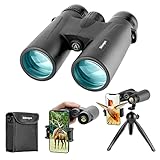
Overview: The Adorrgon 12x42 bundles binoculars with accessories (phone adapter, tabletop tripod), targeting travelers and social sharers. It emphasizes low-light clarity and 12x magnification for birding, cruises, and events.
What Makes It Stand Out: The upgraded phone adapter accommodates phones with cases, and the 18.5mm eyepieces deliver a larger image than typical compacts. Fully multi-coated optics and BAK4 prisms boost low-light performance, while the included tripod reduces shake for photography.
Value for Money: Excellent bundled value—the accessories alone often cost extra. At $50–$70, it undercuts competitors with similar optics (e.g., Celestron Outland X), though the tripod is basic. Ideal for users wanting instant photo/video capture without separate purchases.
Strengths and Weaknesses: Strengths: Bright, clear low-light views; stable phone/tripod setup; comfortable eyepieces; lightweight (1.1 lbs). Weaknesses: Tripod flimsy for heavy use; 12x magnification challenging handheld; rubber armor less durable than premium models.
Bottom Line: A smart pick for social travelers prioritizing photo sharing and decent optics on a budget. The accessories justify its price, but serious birders should test stability. Highly recommended for casual enthusiasts wanting an all-in-one package.
Understanding Core Binocular Specifications
Decoding the Numbers: Magnification and Objective Lens Size
You’ve undoubtedly seen pairs labeled like “8x42” or “10x50.” These numbers are fundamental. The first number (e.g., 8x or 10x) is the magnification – how many times closer the object appears. The second number (e.g., 42mm or 50mm) is the diameter of the objective lens (the front lens) in millimeters. Higher magnification brings subjects closer but narrows the field of view and amplifies hand shake. Larger objective lenses gather more light, crucial for low-light viewing, but increase size and weight. For beginners, a balance is key; extreme numbers often create more problems than they solve.
The Critical Role of Field of View
Field of View (FoV) determines how much of the scene you can see at once through the binoculars, typically measured in feet at 1000 yards or degrees. A wider FoV makes it significantly easier to locate and track moving subjects like birds or athletes and provides a more immersive, less tunnel-vision experience. Beginners often underestimate how vital a generous FoV is for comfort and usability, especially when starting out. It’s closely tied to magnification – generally, higher magnification results in a narrower FoV.
Exit Pupil: Your Window to Brightness
Calculated by dividing the objective lens diameter by the magnification (e.g., 42 / 8 = 5.25mm), the exit pupil is the diameter of the beam of light exiting the eyepiece and entering your eye. A larger exit pupil (5mm or more) delivers a brighter image, especially important in dawn, dusk, or overcast conditions. It also makes it easier to maintain the full image without needing perfect eye placement, which is a huge plus for unsteady hands or beginners still learning proper technique. Your eye’s pupil size also matters – it shrinks with age, making a larger exit pupil increasingly beneficial for older users.
Twilight Factor: Low-Light Performance Demystified
While exit pupil indicates overall brightness, the Twilight Factor (the square root of magnification multiplied by objective lens diameter, e.g., sqrt(8*42) = ~18.3) gives a better indication of detail resolution in low light. A higher number suggests better ability to distinguish fine details as light fades. However, it shouldn’t be the sole deciding factor; optical quality (coatings, glass) plays a massive role. For beginners exploring dawn/dusk viewing, understanding this concept helps set realistic expectations beyond just the exit pupil.
Optical Quality: Beyond the Basic Specs
The Vital Importance of Lens Coatings
Light loss occurs every time light passes through or reflects off a glass surface. Lens coatings – thin layers applied to lens and prism surfaces – minimize this loss and glare, significantly boosting light transmission, image brightness, contrast, and color fidelity. Look for terms like “fully multi-coated” (all air-to-glass surfaces have multiple anti-reflective coatings), which represents excellent quality for the price. Avoid binoculars with minimal or unspecified coatings; the difference in image quality, especially in challenging light, is stark and frustrating for newcomers.
Prism Types: Roof vs. Porro – What Beginners Need to Know
Binoculars use prisms to correct the inverted image created by the lenses. The two main types are Porro prisms (classic offset “dog leg” shape) and Roof prisms (straight-barrel design). Porro prisms often provide slightly better depth perception and can be more affordable at entry levels. Roof prisms offer a more streamlined, ergonomic design that’s often more rugged and weatherproof, but achieving comparable optical quality typically costs more due to stricter manufacturing tolerances. For beginners prioritizing durability and a modern feel, roof prisms are often appealing, but don’t dismiss Porro for pure optical value.
Glass Quality: Why It Matters More Than You Think
Not all glass is created equal. Higher-quality optical glass (like BK-7 or, better yet, BaK-4 for prisms) minimizes internal light scattering and aberrations (distortions), resulting in sharper, clearer images edge-to-edge with truer color rendition. Cheaper glass can introduce chromatic aberration (color fringing) and softness, particularly noticeable around high-contrast edges. While beginners might not spot subtle differences immediately, inferior glass leads to eye strain and a less satisfying experience over time. It’s a core investment in visual comfort.
Ergonomics and User Experience Essentials
Weight and Balance: Comfort is Non-Negotiable
How binoculars feel in your hands and against your face for extended periods is paramount. Heavy binoculars cause fatigue quickly, leading to shaky images and frustration. Consider where you’ll primarily use them: backpacking demands lightness, while stationary viewing (like at a window or on a tripod) allows for slightly heavier models. Pay attention to balance – do they feel front-heavy, straining your wrists, or well-centered? Try holding potential pairs for several minutes; discomfort is a major deterrent to regular use.
Eye Relief: Crucial for Eyeglass Wearers
Eye relief is the distance your eye can be from the eyepiece lens and still see the full field of view. If you wear glasses, you need longer eye relief (typically 14mm or more) to avoid a frustrating “tunnel vision” effect where you can’t see the edges of the image. Many binoculars have twist-up or fold-down eyecups to accommodate this. Ignoring eye relief as a glasses wearer guarantees a poor experience; it’s not just a minor detail, it’s essential for usability.
Focusing Mechanism: Smoothness and Precision
The focusing system needs to be smooth, precise, and easy to operate, often with one hand. Center-pivot focus (one knob moving both barrels) is standard. Test how easily it turns – is it stiff, gritty, or overly loose? Does it allow fine adjustments for sharp focus, or does it feel like it “snaps” between near and far? A good focus mechanism makes the difference between effortlessly locking onto a subject and struggling to get a clear image, directly impacting beginner satisfaction.
Grip and Handling: Confidence in Your Hands
The texture and shape of the housing significantly affect how securely you can hold the binoculars. Look for rubber armor that provides a non-slip, comfortable grip, even when wet or cold. The overall shape should fit naturally in your hands without requiring excessive tension. A secure grip minimizes shake, leading to steadier viewing – a critical factor for beginners who haven’t yet developed rock-steady technique. Don’t underestimate how much confidence a good grip instills.
Environmental Factors and Durability
Waterproofing and Fogproofing: Not Just for Rain
True waterproofing (often rated to specific depths) and fogproofing (achieved by purging internal air and filling with inert gas like nitrogen or argon) are essential for reliability in real-world conditions. Moisture inside the optics is disastrous, causing fogging and potential mold growth. Even if you don’t plan on using them in heavy rain, sudden weather changes, high humidity, or temperature shifts (like moving from a cold car to a warm building) can cause internal fogging in non-sealed models. For beginners investing in their first pair, this protection is non-negotiable for longevity.
Ruggedness and Build Quality: Built to Last
Beginner binoculars will likely get bumped, dropped, or exposed to dust and dirt. A sturdy chassis (often magnesium alloy) combined with durable rubber armor provides crucial shock absorption. Consider how the binoculars feel – flimsy plastic housings feel cheap and won’t withstand regular use. Look for solid construction where moving parts (like focus knobs and diopter adjustments) feel precise and robust. Investing in decent build quality pays off in years of reliable service, preventing early disappointment.
Temperature Tolerance: Beyond Just Weather
Quality binoculars should perform reliably across a reasonable temperature range. Extreme cold can affect focus mechanisms and rubber components, while intense heat can impact internal gas pressure in fogproof models. While most recreational users won’t face extremes, understanding the operational limits (often specified by manufacturers) is wise, especially if you plan adventures in varied climates. Reliable performance in typical outdoor conditions is expected; true extremes are niche concerns.
Choosing Based on Your Primary Activity
Birdwatching and Nature Observation Essentials
For identifying birds or wildlife, a wide field of view is incredibly valuable for locating fast-moving subjects. Moderate magnification (7x or 8x) offers a good stability-to-closeness balance. A decent exit pupil (around 5mm) ensures adequate brightness in forested areas. Comfortable eye relief is vital for prolonged scanning. Size and weight matter significantly if you’ll be carrying them for hours. Porro prism models often offer excellent value here, but high-quality compact roofs are popular for their portability.
Sports and Concert Viewing Priorities
Tracking fast action in a stadium requires a wide field of view above almost all else – you need to see the play develop. Moderate magnification (7x or 8x) is usually sufficient and provides a steadier image than higher powers. Compact size and light weight are major pluses for comfort during long events. Good close focus allows viewing details of performers or athletes relatively near to you. Waterproofing is less critical here unless attending outdoor events in variable weather.
Astronomy and Stargazing Considerations
Viewing celestial objects demands maximum light gathering, so larger objective lenses (50mm+) are highly beneficial, though they increase size and weight. Lower magnification (7x or 10x) is generally preferred over very high powers for wider fields to take in star clusters and nebulae. A large exit pupil (7mm matches the average dark-adapted pupil) is ideal for deep-sky viewing. Stability becomes paramount; consider models compatible with tripods, especially for larger binoculars. Roof prisms often dominate this segment for their robustness.
Frequently Asked Questions
Frequently Asked Questions
What’s the single most important spec for a beginner to focus on? How do I know if the field of view is wide enough for my needs? Why do my binoculars shake so much, and how can I fix it? Can I use any binoculars if I wear glasses? What’s the biggest difference between cheap and expensive beginner binoculars? Do I really need waterproof and fogproof binoculars? How important is the close focus distance for general use? Should I choose binoculars with higher magnification for more detail? What does “fully multi-coated” actually mean for my viewing experience? How do I properly maintain my binoculars to ensure longevity?
Related Buying Guides
- 10 Best Binoculars for Beginners in 2026
- 10 Best Budget Binoculars Under $100 for Outdoor Beginners in 2026
- 10 Best Rifle Scopes for Beginners: 10 Expert Picks for 2026
- 10 Best Rifle Scopes for Beginner Hunters: 10 Expert Picks for 2026
- 10 Best Rifle Scopes for Beginners Who Want Clarity and Durability in 2026