Table of Contents
Pack your mental checklist: sturdy boots, reliable tent, maybe even that questionable freeze-dried lasagna. But what’s ticking silently on your wrist, ready to be the unsung hero of your next wilderness plunge? For backpackers, a watch isn’t just about telling time—it’s a lifeline, a navigator, a weather sentinel, and a durable companion against rock, rain, and relentless sun. Forget the delicate timepiece gathering dust in your drawer; the backcountry demands something forged for adventure, something that thrives where your phone battery wilts and trails vanish into the horizon. Choosing the right one isn’t a luxury; it’s as crucial as knowing which end of the compass points north.
Imagine standing on a windswept ridge, cloud cover rolling in fast, your map flapping wildly. Your phone’s GPS flickers out as the battery icon turns red. This is where a true adventure watch earns its keep. It’s the difference between confidently adjusting your route using built-in topographic maps and waiting for a potentially dangerous storm to pass, unsure of your exact location. It’s the quiet reassurance when crossing a swollen river, knowing your depth gauge and water resistance are up to the task. This guide cuts through the marketing noise, focusing purely on the features, considerations, and real-world performance factors that matter most when your next step could be miles from help. Let’s navigate the essential specs that transform a simple timepiece into your most trusted trail partner.
Top 10 Adventure Watches



Detailed Product Reviews
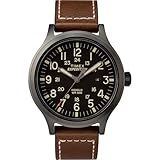
6. Timex Men’s Expedition Scout 43mm Watch – Black Dial & Case with Brown Leather Strap
Overview:
The Timex Expedition Scout is a rugged yet refined field watch designed for outdoor enthusiasts seeking durability and classic style. Its 43mm black case, black dial with full Arabic numerals, and genuine brown leather strap offer a timeless aesthetic suitable for both trails and casual settings. Built with a mineral crystal and 24-hour time display, it caters to military users or those preferring a no-nonsense timepiece.
What Makes It Stand Out:
The Scout distinguishes itself with its authentic 24-hour military time format—a rare feature in affordable field watches—paired with INDIGLO backlighting for instant readability in darkness. The genuine leather strap balances comfort and ruggedness, while the clean, uncluttered dial with a 3 o’clock date window emphasizes practicality without superfluous tech.
Value for Money:
Priced accessibly under $100, it delivers exceptional value by focusing on core functionality over smart features. Compared to pricier military-style watches, it offers comparable durability and the niche 24-hour display at a fraction of the cost, making it ideal for budget-conscious buyers prioritizing simplicity.
Strengths and Weaknesses:
Strengths: Durable mineral crystal; comfortable, adjustable leather strap; highly legible dial; reliable quartz movement; INDIGLO night light.
Weaknesses: Water resistance limited to 30m (splash-proof only); leather strap less suited for wet conditions; basic functionality lacks modern extras like chronographs.
Bottom Line:
A superb entry-level military watch for style and utility. Recommended for those wanting a rugged, no-frills timepiece with true 24-hour functionality at an unbeatable price.
7. Timex Men’s T45181 Expedition Resin Combo Brown/Green Nylon Strap Watch

Overview:
This Timex Expedition model merges digital versatility with analog reliability in a lightweight 39mm resin case. Designed for active users, it features a tan dial, digital sub-dial, and a rugged brown/green nylon strap. With triple time zones, chronograph, and 100m water resistance, it targets travelers and outdoor adventurers needing multi-functional timekeeping.
What Makes It Stand Out:
Its standout feature is the dual analog-digital display, offering a 24-hour chronograph, countdown timer, and three time zones—all enhanced by INDIGLO backlighting. The green resin case and nylon strap provide exceptional durability and comfort for wet environments, while 100m water resistance supports serious aquatic activities like snorkeling.
Value for Money:
At a mid-range price point, it outperforms similarly priced analog-only watches by packing advanced features typically found in higher-end models. The inclusion of multi-timezone tracking and robust water resistance justifies the cost for frequent travelers or water-sport enthusiasts.
Strengths and Weaknesses:
Strengths: 100m water resistance; versatile digital functions; lightweight resin construction; comfortable nylon strap; INDIGLO illumination.
Weaknesses: Acrylic lens prone to scratches; digital display may overwhelm minimalist seekers; green/brown color scheme limits style versatility.
Bottom Line:
An excellent value-packed tool watch for adventurers. Highly recommended for travelers and water-sport users needing reliable multi-functionality without overspending.
8. Timex Men’s T49905 Expedition Field Chronograph Black/Brown Leather Strap Watch

Overview:
The T49905 Expedition Field Chronograph combines military heritage with precision timing in a 43mm brass case. Featuring a black dial with Arabic numerals, a 4 o’clock date window, and a brown leather strap, it’s engineered for outdoor durability while maintaining classic field-watch elegance. Its 30-minute chronograph adds functional depth.
What Makes It Stand Out:
This watch excels with its 1/20th-second chronograph—uncommon in its price tier—paired with INDIGLO lighting for low-light use. The brass case offers vintage appeal and resilience, while the leather strap provides a sophisticated contrast to typical nylon/military straps, bridging field-ready utility and semi-formal wear.
Value for Money:
Competitively priced under $150, it delivers premium features like precise chronograph timing and 100m water resistance that rival watches costing twice as much. The focus on mechanical-style functionality over digital clutter offers superior value for purists seeking analog reliability.
Strengths and Weaknesses:
Strengths: High-precision chronograph; durable brass case; 100m water resistance; comfortable leather strap; excellent INDIGLO visibility.
Weaknesses: Date window at 4 o’clock disrupts dial symmetry; leather strap less ideal for extreme moisture; mineral crystal susceptible to scratches.
Bottom Line:
A top-tier chronograph for field-watch lovers. Recommended for those prioritizing analog timing precision and rugged style at an accessible price.
9. Timex Men’s T2N721 Intelligent Quartz Compass Tide Temperature Silver Case Brown Strap Watch

Overview:
The T2N721 is a specialized outdoor companion featuring tide tracking, temperature measurement, and an analog compass within a 45mm stainless-steel case. Its off-white dial, brown leather strap, and INDIGLO lighting cater to coastal adventurers needing environmental data alongside reliable timekeeping, all with 100m water resistance.
What Makes It Stand Out:
This watch is defined by its niche functionality: a real analog compass, tide tracker (counting down to high/low tide), and dual air/water thermometer. These tools, rarely found together outside high-end dive watches, make it indispensable for surfers, sailors, or beachgoers. The silver case adds subtle elegance to its technical profile.
Value for Money:
While priced slightly higher than basic Timex models, it justifies the cost by consolidating three specialized instruments into one affordable package. Cheaper alternatives lack this integration, making it a smart investment for coastal activity enthusiasts.
Strengths and Weaknesses:
Strengths: Unique tide/temperature/compass trio; robust 100m water resistance; legible INDIGLO dial; premium stainless-steel build.
Weaknesses: Overly specific features limit broad appeal; leather strap impractical for frequent water use; bulky 45mm case may overwhelm smaller wrists.
Bottom Line:
An exceptional tool for water-focused adventurers. Highly recommended only for those needing its specialized functions; otherwise, consider simpler models.
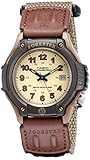
10. Casio FT500WC-5BVCF Men’s Forester Sport Watch with Nylon Band
Overview:
Casio’s Forester Sport is a no-nonsense field watch built for reliability, featuring a 100m-water-resistant nylon band with Velcro closure, Arabic markers, and a 24-hour inner dial. Its quartz movement ensures precision (±20 sec/month), while the three-year battery life targets users prioritizing low maintenance in rugged conditions.
What Makes It Stand Out:
The Velcro fast-wrap band is its hero feature—ideal for wet, muddy, or variable wrist conditions—and the integrated 24-hour dial simplifies military/time-zone tracking. Casio’s reputation for indestructibility, paired with a lightweight design, makes it a workhorse for laborers or hikers.
Value for Money:
Sitting below $50, it offers unbeatable durability and core functionality. Compared to Timex’s pricier nylon-strapped models, it delivers superior water resistance and strap practicality at a fraction of the cost, though with fewer aesthetic flourishes.
Strengths and Weaknesses:
Strengths: Extremely affordable; Velcro strap adapts to any condition; 100m water resistance; long battery life; scratch-resistant resin case.
Weaknesses: Basic mineral crystal; lacks advanced features like chronographs; utilitarian design sacrifices style; Velcro can snag on fabric.
Bottom Line:
The ultimate budget field watch for functionality-first users. Unreservedly recommended for outdoor workers or adventurers needing zero-fuss reliability without frills.
Core Features That Define a True Adventure Watch
Uncompromising Durability and Build Quality
The backcountry is unforgiving. Your watch must withstand impacts from scrambling over boulders, resist scratches from brush, and survive accidental knocks against tent poles or gear. Look for robust case materials like fiber-reinforced polymer, titanium, or stainless steel designed specifically for shock absorption. The construction should feel substantial yet not overly bulky, with secure bezels and tightly sealed buttons that won’t snag or accidentally activate. This isn’t about looking tough; it’s about being tough when the trail throws its worst.
Essential Navigation Capabilities
Getting lost is never part of the plan. Beyond basic compass functionality, serious adventure watches integrate multi-GNSS support (GPS, GLONASS, Galileo, BeiDou) for significantly faster and more accurate location locking, especially in dense forests or deep canyons. Built-in topographic maps with route planning and tracking features are game-changers, allowing you to see your position on detailed terrain without draining your phone. Look for intuitive interfaces that work with gloved hands and clear, high-contrast displays readable in direct sunlight.
Reliable Environmental Sensors
Nature doesn’t follow a schedule, but your watch can help you anticipate it. A precise barometric altimeter tracks elevation gain and, crucially, detects rapid pressure changes signaling incoming storms. A reliable thermometer provides more than just comfort info; it can indicate microclimates or potential avalanche risk. A compass, especially one that auto-calibrates or integrates with GPS for bearing, is non-negotiable for safe navigation when landmarks disappear. These sensors transform your watch from a timekeeper into a vital weather and terrain intelligence tool.
Power Management: Keeping Time When You’re Off the Grid
Maximizing Battery Life for Extended Trips
How long can your watch actually last when you’re deep in the wilderness with no charging options? Standard smartwatch modes often drain in a day, but dedicated adventure models offer weeks or even months in essential timekeeping mode. Crucially, understand the battery life in the modes you’ll actually use – GPS tracking with music playback drains much faster than basic timekeeping with periodic altimeter checks. Prioritize watches with clearly defined, extended battery life specifications for navigation-heavy activities.
The Solar Charging Advantage
Harnessing the sun’s power is a game-changer for long expeditions. Solar charging capabilities, even as a supplement, can significantly extend time between needing an external power source. This isn’t just about convenience; it’s about reliability when your next charging opportunity might be weeks away at a remote outpost. Look for efficient solar panels integrated into the display that work under varying light conditions, not just direct, bright sun. This feature adds a crucial layer of self-sufficiency.
Practical Charging Solutions in the Wild
When solar isn’t enough, how easy is it to recharge? Standard USB-C ports are widely compatible with portable power banks, which are backpacker essentials anyway. Avoid proprietary chargers that add another single-point-of-failure item to your kit. Consider watches that can utilize low-power charging sources effectively, ensuring you can squeeze precious extra hours from a partially drained power bank when you need it most. Portability and compatibility of the charging solution are key.
Design and Usability for Real-World Adventure
Display Clarity in All Conditions
If you can’t read it, it’s useless. A high-resolution, always-on display is vital, but readability under harsh glare is paramount. Look for transflective screens that use ambient light for visibility (like some e-ink displays) or exceptionally bright LCD/OLED panels with anti-reflective coatings. The display should remain clear even when wet or viewed at extreme angles while hiking. Monochrome displays often offer superior sunlight readability and longer battery life compared to full-color options for core navigation tasks.
Intuitive Button Interface vs. Touchscreens
While touchscreens are common, they become frustratingly unreliable with wet, cold, or gloved hands – a constant reality on the trail. Physical, well-spaced, and tactile buttons provide reliable operation in any condition. The button layout should be logical, allowing essential functions (like starting/stopping a track or marking a waypoint) to be performed quickly and without looking. A hybrid approach (buttons plus a limited, glove-friendly touchscreen) can sometimes work, but prioritize physical controls for core functions.
Comfort and Secure Fit for Active Use
You’ll wear this for days, potentially weeks, through sweat, rain, and constant movement. The band material (silicone, nylon, titanium) must be comfortable against skin during long hikes, quick-drying, and resistant to odor buildup. The clasp needs to be secure enough to prevent accidental loss during vigorous activity but easy to adjust with one hand. Consider band width and case thickness – a bulky watch can snag on gear or become uncomfortable under pack straps. It should feel like a natural extension of your wrist, not an obstacle.
Matching Your Watch to Your Adventure Style
Considering Your Typical Trip Duration and Location
A weekend warrior tackling well-marked trails near civilization has different needs than someone embarking on a multi-month thru-hike through remote wilderness. For shorter trips, advanced features like extensive offline maps might be overkill, while battery life becomes less critical. For extended expeditions far from infrastructure, solar charging, extreme battery longevity, and robust offline navigation become non-negotiable priorities. Honestly assess where and how long you typically travel.
Evaluating Environmental Challenges You Face
Are you primarily hiking in temperate forests, or do you venture into extreme cold where battery performance plummets? Do you frequently cross rivers or dive for underwater exploration, demanding high water resistance (100m+)? Will you face intense desert sun requiring maximum display visibility, or dense jungle canopy where multi-GNSS is essential for signal acquisition? Match the watch’s specific resilience (temperature range, water resistance rating, GNSS capabilities) directly to the harshest environments you regularly encounter.
Balancing Tech Needs with Simplicity
More features often mean more complexity and faster battery drain. Do you genuinely need advanced metrics like VO2 max estimation, or would you prefer a streamlined interface focused purely on navigation, time, and essential environmental data? Consider your technical comfort level; a watch packed with features you never use or can’t operate under stress is worse than useless. Prioritize the core functions that directly enhance your safety and navigation, keeping the interface as simple and intuitive as possible for your skillset.
Material Matters: Beyond the Basics
Choosing the Right Crystal for Scratch Resistance
The watch face takes the brunt of abrasion. Sapphire crystal offers the highest scratch resistance, crucial for longevity in rugged use, though it can be more prone to shattering on severe impact than some alternatives. Mineral glass is more impact-resistant but scratches more easily. Some advanced polymers offer a good balance. For serious backpacking, sapphire is generally the preferred choice despite the potential impact trade-off, as constant minor scratches quickly obscure displays.
Band Materials for Longevity and Comfort
Silicone bands are durable, flexible, quick-drying, and comfortable but can retain odors over time. Nylon (like NATO straps) is breathable, dries fast, is highly durable, and offers excellent security (multiple attachment points), though it can absorb water initially. Titanium bands are lightweight, incredibly strong, hypoallergenic, and resist corrosion, but are more expensive and can feel cold. Consider your climate, activity level, and skin sensitivity when choosing – prioritize materials that won’t chafe during long days and resist degradation from sweat and elements.
Case Material Trade-offs: Weight vs. Strength
Fiber-reinforced polymer cases are extremely lightweight and offer excellent shock absorption, making them ideal for minimizing pack weight and handling impacts. Titanium provides exceptional strength-to-weight ratio, is corrosion-proof, and feels premium, but at a higher cost. Stainless steel is very strong and scratch-resistant but significantly heavier. For multi-day backpacking where every ounce counts, polymer or titanium cases are usually the most practical choices, balancing durability with weight savings.
Frequently Asked Questions
How important is GPS accuracy for backpacking compared to just having a compass?
GPS accuracy is critical for precise location tracking, especially in featureless terrain or dense forests where compass navigation alone is challenging. While a compass is essential backup, GPS provides your exact position on a map, tracks your route, and allows for detailed trip planning and sharing – capabilities a compass simply doesn’t offer. Prioritize multi-GNSS support for the best accuracy in difficult conditions.
Can I rely solely on a watch for navigation, or should I always carry a paper map and compass?
Never rely solely on any electronic device. A paper map and physical compass are non-negotiable essentials. Batteries fail, electronics break, and signals can be lost. Your watch is a powerful tool for navigation, but it must be used in conjunction with traditional skills and backup methods. Practice using your map and compass regularly.
What level of water resistance do I really need for backpacking?
For general backpacking (rain, stream crossings), 50 meters (5 ATM) is the absolute minimum, but 100 meters (10 ATM) is strongly recommended. This provides a safety margin for accidental submersion (e.g., falling into a river) and protects against water pressure during deeper crossings. Avoid watches rated only for “splash resistance” (30m/3ATM) for serious backcountry use.
Is solar charging worth the potential extra cost for most backpackers?
For trips longer than a few days, or for anyone venturing far from power sources, solar charging is highly valuable. It significantly extends usable time between needing to carry a large power bank solely for the watch. While it adds cost, the increased self-sufficiency and peace of mind for extended adventures make it a worthwhile investment for many serious backpackers.
How do I know if the battery life specs are realistic for my actual use?
Manufacturer battery life claims often reflect ideal conditions. Focus on the battery life stated for the specific mode you’ll use most (e.g., “GPS mode with music”). Look for independent reviews that test battery life under real-world hiking conditions with similar usage patterns. Be conservative – assume you’ll get slightly less than advertised, especially in cold temperatures.
Are touchscreen watches practical with gloves or wet hands on the trail?
Generally, no. Touchscreens become highly unreliable with standard backpacking gloves or wet fingers. Physical buttons provide consistent, tactile feedback and operation in all weather conditions. Some watches offer limited glove-mode touch functionality, but for core navigation tasks (starting/stopping tracks, marking points), well-designed physical buttons are vastly superior and more reliable in the field.
What’s the most important sensor besides GPS for safety?
A barometric altimeter is arguably the most crucial secondary sensor. It provides precise elevation data for navigation and, more importantly, tracks barometric pressure changes. A rapid drop in pressure is a reliable indicator of approaching storms, giving you critical time to seek shelter – a vital safety feature when weather can change rapidly in the mountains.
How rugged do I need the watch to be? Won’t any “sports watch” suffice?
Standard sports or running watches are often not built for the sustained, harsh impacts of backpacking (bushwhacking, scrambling, pack friction). Look for watches explicitly rated for “adventure” or “outdoor” use, which undergo more rigorous testing for shock resistance, extreme temperatures, and sustained water exposure. Durability standards like MIL-STD-810H certification indicate serious ruggedness.
Can I replace the band easily if it breaks on the trail?
Yes, and it’s highly advisable to carry a spare band or two (especially nylon). Most adventure watches use standardized 20mm or 22mm lugs with simple spring bars, allowing for quick band swaps with minimal tools (often just a small flathead screwdriver or even a rock in a pinch). Practice changing it at home first.
Do I need advanced health metrics like heart rate or blood oxygen for backpacking?
For the vast majority of backpackers, advanced health metrics are non-essential and primarily drain battery life. A basic heart rate monitor can help gauge exertion levels on steep climbs, but it’s not critical for safety or navigation. Prioritize core navigation, battery life, and durability over health tracking features unless you have specific medical monitoring needs.
Related Buying Guides
- 10 [Product Type] Recommendations for Solo Backpackers in 2026
- 10 Best Alcohol Stoves for Ultralight Backpackers This Year
- The 10 Best Canister Stoves for Lightweight Backpackers in 2026
- The 10 Best Folding Hunting Knives for Backpackers in 2026
- 10 Best Portable Coolers for Backpackers Who Need Lightweight Gear in 2026