Table of Contents
Choosing the right rifle scope on a budget feels like navigating a minefield. You’ve heard the horror stories: scopes that fog internally after one rainy hunt, turrets that slip zero after minimal recoil, or lenses that deliver a dim, distorted image when spotting game at dusk. It’s frustrating to invest hard-earned cash only to find your optic becomes the weak link in an otherwise reliable setup. The good news? Truly affordable scopes that deliver surprising optical clarity, rugged reliability, and consistent performance do exist. You just need to know exactly what to prioritize and where manufacturers can cut costs without compromising the core functionality you rely on in the field.
Gone are the days when “budget” automatically meant “barely functional.” Advances in manufacturing, coating technologies, and design have trickled down significantly, offering hunters and shooters access to optics that punch far above their price point. The key isn’t just finding the cheapest option; it’s understanding the critical features that define quality and identifying which specifications are non-negotiable for your specific needs versus where you can wisely save. This guide cuts through the marketing noise, focusing on the tangible elements that separate a genuinely capable, affordable scope from one that will leave you disappointed. We’ll explore the optical and mechanical fundamentals, practical testing considerations, and smart shopping strategies to ensure your next scope investment delivers peak performance without draining your wallet.
Top 10 Rifle Scopes
Detailed Product Reviews
1. Vortex Triumph HD 3-9x40 Second Focal Plane, 1-inch Tube Riflescope Kit - Dead-Hold BDC (MOA) Reticle, 1" Hunter Rings - 0.90" Low Height, Neoprene Cover
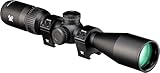
Overview: The Vortex Triumph HD 3-9x40 kit targets novice hunters seeking reliable, straightforward optics. It bundles a riflescope, low-profile 1" Hunter Rings, and a neoprene cover, prioritizing ease of setup and field durability without overwhelming complexity.
What Makes It Stand Out: Its HD optical system uses select glass to minimize chromatic aberration while maximizing edge-to-edge sharpness and light transmission. The Dead-Hold BDC reticle simplifies holdover and windage corrections, and fully multi-coated lenses enhance low-light clarity. The inclusion of purpose-matched rings and a cover streamlines the purchasing process.
Value for Money: Priced mid-range, it delivers exceptional optical performance and robust construction (aircraft-grade aluminum, waterproof/fogproof) typically found in costlier models. The complete kit eliminates the need for separate ring purchases, offering tangible savings versus piecing together comparable components.
Strengths and Weaknesses: Strengths: Excellent light transmission, intuitive BDC reticle, rugged build quality, and complete kit convenience. Weaknesses: Limited magnification range for long-range shooting, and SFP reticle requires consistent magnification for accurate holdovers.
Bottom Line: An outstanding entry-level riflescope kit that balances performance, durability, and simplicity. Highly recommended for new hunters wanting quality optics without technical headaches or hidden accessory costs.
2. AGM Global Vision Rattler V2 19-256 Thermal Imaging Rifle Scope |Thermal Scope with 950 Yards Detection Range and 2.5X Base Magnification, Thermal Vision riflescope Ideal for Hunting

Overview: The AGM Rattler V2 is a high-performance thermal riflescope engineered for hunters targeting game in total darkness or challenging cover, featuring a 950-yard detection range and versatile thermal imaging capabilities.
What Makes It Stand Out: Its 2.5x base magnification and wide field of view enable rapid target acquisition in dense terrain. Unique features include shot-activated recording with audio, dual rechargeable batteries (11.5-hour runtime), stadiametric rangefinder, and 8x digital zoom. IP67 waterproofing and extreme temperature tolerance (-22°F to 131°F) ensure reliability.
Value for Money: While premium-priced, it justifies cost through dual-battery stamina, hands-free recording, and extensive customization (10 reticles, 4 color palettes). Competitors often charge extra for recording or lack battery redundancy, making this a robust investment for serious thermal hunters.
Strengths and Weaknesses: Strengths: Exceptional battery life, intuitive recording, rugged all-weather build, and fast target engagement. Weaknesses: Limited to 256x192 resolution (lower detail than high-end models), and 950-yard detection is theoretical; practical identification range is shorter.
Bottom Line: A top-tier thermal scope offering unmatched operational stamina and innovative features. Ideal for hunters prioritizing reliability and hands-free documentation, delivering exceptional value for its class.
3. CVLIFE 3-9x40 Optics R4 Reticle Crosshair Scope with 20mm Scope Mounts, Black

Overview: This CVLIFE scope is a budget-friendly 3-9x40 riflescope kit featuring a basic R4 crosshair reticle and included 20mm mounts, designed for casual shooters or hunters needing an affordable, functional optic.
What Makes It Stand Out: Minimalism defines this model—it offers essential magnification for medium-range use without frills. The simple crosshair reticle ensures uncluttered target acquisition, and the included mounts lower the entry barrier for cost-conscious buyers. However, it lacks advanced features like illumination or specialized coatings.
Value for Money: Its ultra-low price point makes it accessible for beginners or as a backup scope. While it meets basic functional needs, optical clarity and light transmission are noticeably inferior to mid-tier brands, reflecting its budget construction.
Strengths and Weaknesses: Strengths: Very affordable, lightweight, and includes mounts; adequate for close-range plinking or novice hunting. Weaknesses: Poor low-light performance, plasticky build quality, inconsistent turrets, and limited eye relief increase the risk of scope bite.
Bottom Line: A functional but bare-bones option only suitable for tight budgets or non-critical applications. Not recommended for serious hunting; prioritize durability and optics over cost savings here.
4. CVLIFE Hunting Rifle Scope 6-24x50 AOE Red and Green Illuminated Gun Scope with Free Mount
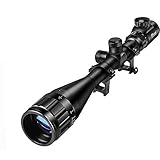
Overview: CVLIFE’s 6-24x50 illuminated scope targets hunters needing variable magnification and reticle visibility in low light, bundling a 50mm objective scope with free mounts at an aggressive price point.
What Makes It Stand Out: Dual-color (red/green) illumination and high 24x magnification stand out for the price, enabling twilight shooting. The 1/8 MOA click value promises precise adjustments, though real-world accuracy is inconsistent. The large objective lens theoretically aids light gathering but suffers from basic coatings.
Value for Money: It’s exceptionally cheap for its magnification range and illumination. However, optical haze, parallax issues, and fragile internals undermine its utility. Competing budget brands often offer better durability, making this a gamble despite the low cost.
Strengths and Weaknesses: Strengths: High magnification range, illuminated reticle, and included mounts; sufficient for stationary target shooting at moderate distances. Weaknesses: Blurry edges beyond 12x, unreliable illumination, poor shock resistance, and frequent zero shifts.
Bottom Line: Only consider if funds are severely limited and usage is occasional. Serious shooters should invest slightly more for reliability; this scope’s weaknesses outweigh its tempting price.
5. CVLIFE 3-9x40 Optics R4 Reticle Crosshair Scope with 11mm Dovetail Scope Mounts, Black

Overview: This CVLIFE 3-9x40 scope pairs a traditional R4 crosshair reticle with 11mm dovetail mounts, offering an entry-level optic solution for rimfire rifles or air guns where cost is paramount.
What Makes It Stand Out: Compact dimensions (12.2" length) and 3.5" eye relief cater to shorter-recoil platforms. The R4 reticle provides clean aiming points, but the scope lacks coatings for glare reduction or light transmission—typical of its price tier. No standout features distinguish it beyond affordability.
Value for Money: It’s nearly the cheapest option available, ideal for casual plinking or youth rifles. However, the flimsy mounts and soft turrets often require frequent re-zeroing, negating savings if reliability is needed.
Strengths and Weaknesses: Strengths: Ultra-low cost, lightweight, and simple setup; functional for close-range (<100yd) use in good light. Weaknesses: Narrow field of view (14’-25’ @ 100yds), poor optical clarity, and mounts prone to slippage compromise accuracy and longevity.
Bottom Line: A last-resort budget scope for non-critical applications. Avoid for hunting; even modest upgrades deliver vastly better performance and peace of mind.
6. SIG SAUER Tango-SPR 6-24x52mm 30mm Tube Second Focal Plane/SFP/F2 Shockproof Waterproof Fogproof Tactical Riflescope | MOA BDC-1 Reticle, Flip-Back Caps & Throw Lever Included, SOTS46000

Overview: The SIG SAUER Tango-SPR is a high-performance tactical riflescope engineered for precision shooting at extended ranges, featuring a 6-24x magnification range and robust 30mm tube construction. Designed for competitive shooters and tactical professionals, it emphasizes optical clarity and rapid adjustments in demanding environments. What Makes It Stand Out: Its standout features include the locking zero-stop elevation turret for reliable reset after long shots, the included throw lever for swift magnification changes, and the MOA BDC-1 reticle optimized for ballistic compensation. The 4:1 optical system with low-dispersion glass delivers exceptional edge-to-edge clarity, while the side focus and exposed turrets ensure precise environmental compensation. Value for Money: Positioned at a premium price point, it justifies cost through SIG’s proven engineering, factory-installed SPR mount, and comprehensive accessory package (flip-back caps, throw lever). It outperforms similarly priced scopes in optical quality and turret precision, though budget hunters may find it excessive for shorter ranges. Strengths and Weaknesses: Strengths: Outstanding low-light clarity, rugged waterproof/fogproof build, intuitive zero-stop system, and superior glass. Weaknesses: Heavy weight due to large objective lens, complex turrets may overwhelm beginners, and SFP reticle limits holdover accuracy at lower magnifications. Bottom Line: An elite tactical scope ideal for long-range competitors and professionals needing repeatable precision; its premium features and durability warrant the investment despite the steep cost for casual users.
7. UUQ 3-9×40 Rifle Scope with Red/Green Illumination and Rangefinder Reticle-Fits 20mm Free Mounts,Waterproof and Fog-Proof
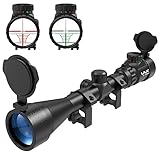
Overview: The UUQ 3-9x40 is an affordable, illuminated riflescope targeting hunters and recreational shooters, offering versatile magnification and dual-color reticle illumination. Its rangefinder reticle and budget-friendly design cater to those needing quick target acquisition in variable light. What Makes It Stand Out: The dual-red/green illuminated rangefinder reticle with five brightness levels is its key differentiator, enhancing low-light usability without breaking the bank. Full multi-coated lenses and aircraft-grade aluminum construction deliver surprising optical clarity and durability for its price bracket. Value for Money: Exceptional value under $150, outperforming many entry-level scopes with its 1/4 MOA click adjustments, nitrogen-purged fogproofing, and included mounting rings. While not matching premium optics, it offers critical features like reliable illumination and solid waterproofing rarely found this affordably. Strengths and Weaknesses: Strengths: Bright illumination options, crisp rangefinder reticle, lightweight build, and included rings simplify setup. Weaknesses: Narrower field of view at high magnification, plastic lens caps feel flimsy, and eye relief can be inconsistent during recoil. Bottom Line: A compelling budget choice for hunters needing illumination and decent optics; ideal for beginners or as a secondary scope, though serious long-range shooters should consider higher-tier models.
8. Bushnell Banner 3-9x40mm Riflescope, Dusk & Dawn Hunting Riflescope (BDC Reticle)
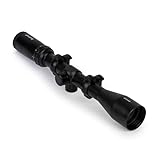
Overview: Bushnell’s Banner Dusk & Dawn 3-9x40 is a purpose-built hunting riflescope optimized for low-light conditions at dawn and dusk, leveraging specialized coatings and a classic magnification range favored by big-game hunters. What Makes It Stand Out: The Dusk & Dawn Brightness (DDB) multi-coating significantly boosts light transmission beyond standard scopes, providing exceptional clarity in fading light. Its extended 6-inch eye relief enhances safety with hard-kicking rifles, while the argon-purged IPX7 waterproofing ensures reliability in harsh weather. Value for Money: Priced mid-range, it offers outstanding value with Bushnell’s trusted durability and superior low-light performance. It outshines competitors in its class with the DDB tech and argon fogproofing, making it a smarter investment than basic fully multi-coated alternatives. Strengths and Weaknesses: Strengths: Best-in-class twilight visibility, generous eye relief, rugged waterproof/fogproof build, and user-friendly BDC reticle. Weaknesses: Reticle lacks illumination for total darkness, and turret adjustments lack tactile feedback for precise long-range tuning. Bottom Line: The top recommendation for hunters prioritizing dawn/dusk performance; its reliability, clarity, and thoughtful design justify the cost for serious field use.
9. SIG SAUER Buckmasters 3-12x44mm 1" Tube Second Focal Plane/SFP/F2 Durable Shockproof Waterproof Fogproof Black Riflescope, Buckmasters BDC Reticle, Flip-Back Lens Covers Included

Overview: The SIG SAUER Buckmasters 3-12x44mm is a versatile hunting riflescope blending SIG’s optical expertise with the Buckmasters brand’s field-proven design, targeting hunters seeking accuracy from close cover to mid-range distances. What Makes It Stand Out: Its exclusive Buckmasters BDC reticle, calibrated for 500-yard holdovers with common hunting cartridges, simplifies shot placement in the field. The 3x optical system with low-dispersion glass ensures bright, color-accurate images, while the integrated throw lever thread enables quick magnification shifts. Value for Money: Solid value in the mid-to-high tier, offering SIG’s renowned build quality and optical clarity at a more accessible price than tactical lines. The included flip-back caps and reliable waterproofing provide immediate field readiness, outperforming similarly priced scopes in glass quality. Strengths and Weaknesses: Strengths: Highly effective BDC reticle, robust 1-piece tube, excellent twilight performance, and easy magnification adjustment. Weaknesses: SFP reticle limits holdover precision at low zoom, and windage turret lacks zero-reset capability. Bottom Line: A hunter-focused winner for woods and plains; its specialized reticle and SIG reliability make it a worthy upgrade from entry-level scopes.
10. Simmons Truplex .22 Mag 4x32 Riflescope, Rimfire Rifle Scope with TrueZero Adjustment System and Rings Included, Low Caliber and Airsoft Riflescope
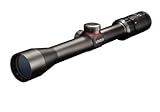
Overview: The Simmons Truplex .22 Mag 4x32 is an entry-level rimfire riflescope designed for small-caliber rifles and airsoft, featuring fixed 4x magnification and a simple Truplex reticle for straightforward target acquisition. What Makes It Stand Out: Its TrueZero adjustment system ensures reliable zero retention after recoil—a rarity in this price range—while the included mounting rings simplify installation. The matte finish and rugged construction withstand light calibers, making it ideal for plinking and small-game hunting. Value for Money: Unbeatable value under $50, offering essential features like waterproofing and decent optics for rimfire use. Though not for high-power rifles, it outperforms dollar-store alternatives with its durability and included accessories, perfect for beginners. Strengths and Weaknesses: Strengths: Budget-friendly, easy setup with rings, shockproof for .22 LR, and clear Truplex reticle. Weaknesses: Limited fixed magnification, narrow field of view, and coatings yield dimmer images in low light versus pricier scopes. Bottom Line: The go-to economical scope for rimfire enthusiasts; flawless for casual shooting but lacks versatility for serious hunting or long-range applications.
Understanding the Core Value Proposition of Budget Optics
Demystifying the “Affordable” Label in Modern Optics
The term “affordable” in today’s rifle scope market is relative and constantly evolving. It no longer strictly signifies basic, entry-level functionality. Instead, it often points to scopes leveraging efficient manufacturing processes, slightly simplified feature sets (like fewer adjustment options), or strategic material choices while retaining core optical quality. Understanding this shift is crucial; you’re not necessarily buying “less,” you’re often buying “smartly optimized” for essential performance. Recognizing where value is truly added versus where cost-cutting impacts usability is the first step to a successful purchase.
The Critical Balance: Optical Performance vs. Mechanical Durability
True value in an affordable scope hinges on a delicate equilibrium. Exceptional glass is pointless if the scope can’t withstand recoil and environmental stress. Conversely, a tank-like chassis with mediocre optics defeats the purpose of precise aiming. Prioritize scopes where manufacturers invest in core optical elements (lenses, coatings) and proven sealing/fog-proofing techniques without over-engineering non-essential external features. This balance ensures the scope delivers a clear, reliable sight picture shot after shot, season after season, which is the ultimate measure of quality at any price point.
Why “Good Enough” is Often Exceptional for Most Applications
Many shooters unnecessarily chase high-magnification ranges or ultra-fine turrets designed for extreme long-range precision, features that significantly inflate cost. For the vast majority of hunting and recreational shooting scenarios – deer hunting in dense woods, varmint control at moderate ranges, or general plinking – a scope offering 3-9x magnification, solid low-light transmission, and reliable 1/4 MOA adjustments is not just “good enough,” it’s exceptionally capable. Recognizing your actual functional requirements prevents overspending on capabilities you’ll rarely, if ever, utilize.
Essential Optical Features That Define Quality
Lens Quality and Glass Clarity: The Non-Negotiable Foundation
The heart of any scope is its glass. Even at lower price points, look for scopes specifying fully multi-coated (FMC) lenses. This means all air-to-glass surfaces have multiple anti-reflective coatings, maximizing light transmission and minimizing glare. Avoid scopes that only mention “multi-coated” without specifying “fully,” as this often applies coatings only to the outer surfaces. Clear, bright, high-contrast images, especially during dawn or dusk, are achievable in budget optics when FMC is implemented correctly – this is non-negotiable for real-world usability.
Coating Types and Their Impact on Light Transmission
Beyond FMC, understanding coating quality matters. While premium scopes boast proprietary high-density coatings, affordable models often use effective standard multi-coatings. Look for mentions of “broadband” or “anti-reflective” coatings in the specifications. These coatings work across a wider spectrum of light wavelengths, gathering more usable light. The practical result? A noticeably brighter image in low-light conditions compared to scopes with basic or single-layer coatings, directly impacting your ability to acquire targets when it counts most.
Field of View: Why Wider is Often Better (Especially on a Budget)
A generous field of view (FOV) is frequently an overlooked value feature in budget scopes. A wider FOV makes target acquisition faster, reduces eye strain during scanning, and provides better situational awareness – critical for hunting moving game or shooting in dense environments. While high magnification can narrow FOV, prioritize scopes that offer a reasonable FOV at the magnifications you’ll actually use most. A scope with a slightly narrower max magnification but a significantly wider usable FOV often provides a more practical and satisfying shooting experience than one pushing magnification limits with a tunnel-vision effect.
Mechanical and Construction Considerations for Reliability
Tube Material and Diameter: Strength vs. Weight Trade-offs
Most affordable scopes utilize 1-inch diameter aluminum tubes – a proven, reliable standard. While 30mm tubes are popular for higher-end models (offering more internal adjustment travel), the 1-inch standard is perfectly adequate for the adjustment ranges needed by most hunters and shooters. Aluminum provides an excellent strength-to-weight ratio. Ensure the tube is aircraft-grade (often 6061-T6 or similar) for durability without excessive weight. Anodized finishes not only look good but provide crucial corrosion resistance against the elements.
Sealing and Fog Proofing: Essential for All-Weather Reliability
This is absolutely critical and should never be sacrificed, even on a budget. Look explicitly for scopes purporting to be “nitrogen-purged” and “O-ring sealed.” Nitrogen purging removes moisture-laden air from inside the tube, while quality O-rings create a barrier preventing external moisture and dust ingress. This combination ensures the scope remains fog-free internally during rapid temperature changes (like moving from a heated cabin to a cold morning stand) and functions reliably in rain, snow, or high humidity. Scopes lacking this specification are a gamble not worth taking.
Mounting Surface and Ring Compatibility
A scope is only as good as its mount. Ensure the scope tube has a smooth, consistent outer diameter and features flat, parallel mounting surfaces (often called “flat-top” or “dovetail” sections, though less common now) designed specifically for standard scope rings. Avoid scopes with uneven knurling or protrusions that interfere with ring contact. Compatibility with widely available 1-inch or 30mm rings (matching your chosen tube size) is essential for a secure, stable, and repeatable zero. Poor mounting surfaces lead to slippage and accuracy issues, negating any optical quality.
Adjustment Systems and User Experience
Turret Design: Target vs. Hunting Adjustments
Turret style significantly impacts usability and cost. Target-style turrets (tall, exposed, often with audible clicks and resettable zeros) are fantastic for precision shooting but add complexity and cost. Hunting turrets are typically lower-profile, capped (to prevent accidental bumps), and designed for quick, reliable adjustments in the field. For most affordable scopes intended for hunting, capped turrets are ideal – they protect adjustments during rough handling while still allowing precise dialing when needed. Avoid scopes with stiff, inconsistent, or mushy turret action; smooth, positive feedback is essential.
Click Value Consistency and Reliability
The precision of your adjustments relies entirely on consistent click values. A “1/4 MOA” click must actually move the point of impact 1/4 inch at 100 yards, every single time, without slippage or backlash. Budget scopes can vary here. Research user experiences regarding adjustment consistency – does it track reliably when dialed up and back down? Are the clicks distinct and uniform? Inconsistent tracking is a major flaw that renders even bright optics useless for accurate shot placement at distance. This is harder to verify without testing, but reputable brands generally have better quality control here.
Parallax Adjustment: Necessary or Nice-to-Have?
Parallax error causes the reticle to appear to move off the target when your eye shifts position. Higher magnification scopes (typically above 10x) are more susceptible. Many affordable scopes in the popular 3-9x range feature a fixed parallax setting, usually factory-set at 100 yards – perfectly adequate for most hunting distances. Scopes with adjustable objective (AO) or side-focus parallax correction add cost and complexity. For typical hunting magnifications and ranges, a fixed parallax setting is sufficient and represents a smart cost-saving measure without sacrificing practical accuracy.
Reticle Options and Practical Functionality
First Focal Plane (FFP) vs. Second Focal Plane (SFP): Understanding the Trade-off
This is a significant differentiator. In SFP scopes (more common in budget models), the reticle size remains constant while the target image zooms; holdover marks are only accurate at one specific magnification (usually max power). In FFP scopes, the reticle scales with the zoom, meaning holdover marks are accurate at any magnification. FFP offers a significant advantage for ranging and holds at various powers but traditionally costs more. For many hunters using primarily one magnification setting, a well-designed SFP reticle with clear markings at its designated power is perfectly functional and keeps costs lower.
Illuminated Reticles: When the Benefit Justifies the Cost
An illuminated reticle can be a game-changer in extremely low-light conditions, making the aiming point stand out against dark backgrounds. However, it adds cost, complexity (battery requirement), and potential points of failure. Evaluate your typical shooting environment: if you primarily hunt in open fields during daylight, illumination might be unnecessary. If you often shoot in dense timber at dawn/dusk, it could be worth seeking out in a budget model. Ensure the illumination offers sufficient brightness levels and a reliable, easily accessible control.
Reticle Simplicity and Clarity for Fast Target Acquisition
In the heat of the moment, especially while hunting, a clean, uncluttered reticle is paramount. Complex BDC (Bullet Drop Compensator) reticles with numerous stadia marks can be overwhelming. A simple duplex, crosshair, or basic BDC pattern often provides the fastest, clearest sight picture for instinctive shooting. Budget scopes sometimes cram in overly complex reticles as a perceived value-add, but prioritize clarity and speed over excessive markings. A bright, crisp center aiming point is far more valuable than dozens of rarely-used holdover dots.
Practical Testing and Real-World Evaluation
The Importance of Hands-On Handling and Eye Relief
Never buy solely based on specs or photos. If possible, handle the scope. Check the smoothness of the zoom ring and focus (if applicable). Ensure the eye relief (distance your eye must be from the ocular lens for a full sight picture) is comfortable and consistent across the magnification range. Short eye relief can cause “scope bite” (injury from recoil), while inconsistent eye relief forces awkward head positioning. A scope that feels solid, operates smoothly, and offers comfortable eye relief in your hands is worth more than slightly better paper specs on a scope that doesn’t fit you.
Evaluating Low-Light Performance in Store Conditions
While you can’t perfectly simulate dawn in a store, you can assess low-light potential. Dim the overhead lights if possible. Look through the scope at a moderately lit object across the room. Compare the brightness, color fidelity, and edge-to-edge clarity against other scopes in the same price bracket. Does the image remain relatively clear towards the edges? Does it transmit light well, or does it look noticeably dimmer than competitors? This quick test reveals significant differences in coating and glass quality often missed in spec sheets.
Checking Build Quality: Fit, Finish, and Potential Weak Points
Inspect the scope closely. Are the lens housings tightly secured? Does the tube feel solid with no play when gently twisting the objective and ocular ends? Look for clean machining on the adjustment turrets and smooth operation. Check the O-rings around the turrets and objective lens – they should be present and appear intact. Avoid scopes with visible mold lines, rough anodizing, or loose parts. A well-finished scope often indicates better overall quality control, even at a lower price point.
Smart Shopping Strategies for Maximum Value
Researching Brands Known for Consistent Budget-Quality
Certain manufacturers have built strong reputations for delivering exceptional value in the affordable segment. These brands often leverage economies of scale, efficient production, and a focus on core features without unnecessary frills. Research user reviews specifically for models in your target price range, looking for consistent themes regarding optical clarity, reliability, and customer service. A brand known for standing behind its budget offerings provides significant peace of mind.
Understanding Warranty and Customer Service Policies
A robust warranty is a powerful indicator of a manufacturer’s confidence in their product, especially at lower price points. Look for scopes offering extensive, no-questions-asked warranties (e.g., lifetime warranties). Pay attention to the fine print: does it cover accidental damage? What is the turnaround time for repairs? Responsive and hassle-free customer service can transform a potential disappointment into a positive experience if an issue arises, making it a crucial, often undervalued, component of overall value.
Timing Purchases and Avoiding Common Pitfalls
Avoid the peak pre-season rush when demand is highest. Consider shopping during off-seasons (late winter/early spring) or taking advantage of major sales events (like post-holiday sales). Be wary of “too good to be true” deals on obscure brands with no reviews; they often signify poor quality or counterfeit products. Prioritize purchasing from authorized dealers to ensure warranty validity and product authenticity. Patience and purchasing from reputable channels often yield better value than impulsive buys.
Frequently Asked Questions
Can a truly reliable scope be found under $200?
Yes, absolutely. Numerous manufacturers now offer scopes in the $150-$250 range that feature fully multi-coated optics, nitrogen purging, solid aluminum construction, and reliable adjustments suitable for most hunting and recreational shooting. Focus on core features like sealing and glass quality over excessive magnification or complex reticles.
Do affordable scopes hold zero reliably after recoil?
Reputable brands in the affordable segment design their scopes specifically to withstand common calibers (like .308 Winchester or .30-06 Springfield). Look for scopes explicitly stating they are tested for recoil impulse. Proper mounting with adequate torque on quality rings is equally critical for maintaining zero, regardless of scope price.
Is 1-inch tube size sufficient, or should I pay more for 30mm?
For the vast majority of shooters, a 1-inch tube is perfectly adequate. It offers sufficient adjustment range for hunting and typical shooting distances. The main advantage of 30mm (more internal adjustment travel) is primarily beneficial for extreme long-range shooting. Don’t pay extra for 30mm unless you have a specific need for massive elevation adjustments.
How important is eye relief for a budget hunting scope?
Eye relief is critically important for safety and usability, especially on scopes mounted on rifles with significant recoil. Most quality hunting scopes, even affordable ones, offer eye relief in the 3.5-4.5 inch range, which is generally safe for common calibers. Always verify the specified eye relief matches your rifle’s recoil characteristics.
Are illuminated reticles worth the extra cost in a budget scope?
It depends entirely on your typical shooting conditions. If you frequently hunt in very low-light situations (deep woods at dusk), illumination can be a significant advantage worth seeking out. If you primarily shoot in good daylight, it’s an unnecessary cost and complexity. Many budget scopes now offer illumination without a huge premium.
Do I need parallax adjustment on an affordable scope?
For scopes with maximum magnification of 9x or lower (like popular 3-9x models), a fixed parallax setting (usually 100 yards) is entirely sufficient for hunting distances. Parallax adjustment becomes more critical at higher magnifications (12x+) or for precision shooting at known distances. It’s a safe cost-saving feature to omit in most budget hunting scopes.
How can I tell if the glass is actually good on a cheap scope?
Look for “Fully Multi-Coated” (FMC) in the specifications. In person, check for brightness, color accuracy (minimal yellow/blue tint), and edge-to-edge clarity in low-light store conditions. Avoid scopes with noticeable haze, distortion at the edges, or poor contrast. Read user reviews specifically mentioning optical performance.
Will budget scopes fog up internally?
Quality affordable scopes from reputable brands are nitrogen-purged and O-ring sealed, making internal fogging extremely rare under normal conditions. Avoid scopes that don’t explicitly state nitrogen purging and O-ring sealing, as these are essential for preventing fogging. Proper sealing is a standard feature in legitimate budget optics today.
Are capped turrets less reliable than exposed target turrets?
No, capped turrets are designed for hunting durability and are just as mechanically reliable for dialing adjustments. The caps protect against accidental bumps in the field. The adjustment mechanism itself (gears, springs) is the key to reliability, not the presence of caps. Smooth, consistent action is what matters.
What’s the most common failure point in affordable rifle scopes?
Historically, poor sealing leading to moisture ingress was a major issue. Today, with widespread nitrogen purging, the most common problems in budget scopes tend to be inconsistent adjustment tracking (turrets not moving the point of impact accurately) or eventual coating degradation if low-quality coatings are used. Prioritize brands known for adjustment consistency.
Related Buying Guides
- 10 Affordable Air Rifle Scopes That Don’t Sacrifice Clarity in 2026
- 10 Affordable Hunting Scopes That Don’t Sacrifice Quality in 2026
- 10 Affordable Binoculars That Don’t Sacrifice Quality in 2026
- 10 Affordable Hunting Binoculars That Don’t Sacrifice Quality in 2026
- 10 Affordable Porro Prism Binoculars That Don’t Sacrifice Quality in 2026